
The journal
What to pack in a travel first aid kit
A clear, compact guide to building a travel first aid kit: core wound-care supplies, smart OTC medicines, prescriptions, and how to adapt for your trip.
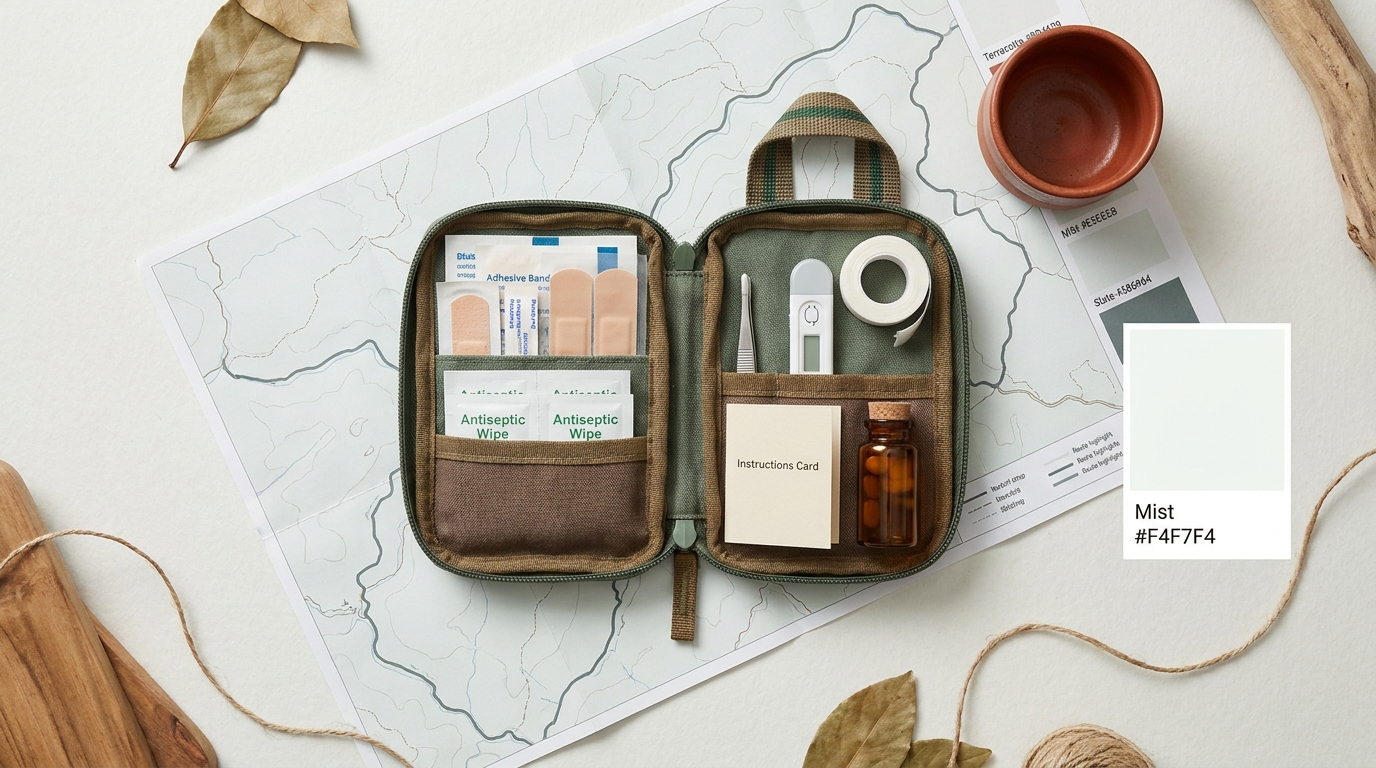
Pack a small, clearly labeled pouch with adhesive bandages in multiple sizes, sterile gauze and medical tape, antiseptic wipes, antibiotic ointment, tweezers, a digital thermometer, and a pain reliever. Add your prescription medicines in original containers, and tailor extras to your destination and activities, like insect repellent, oral rehydration salts, or blister care. These essentials are supported by travel health guidance from the CDC Yellow Book and Cleveland Clinic resources (CDC Yellow Book; Cleveland Clinic).
Build a compact base kit
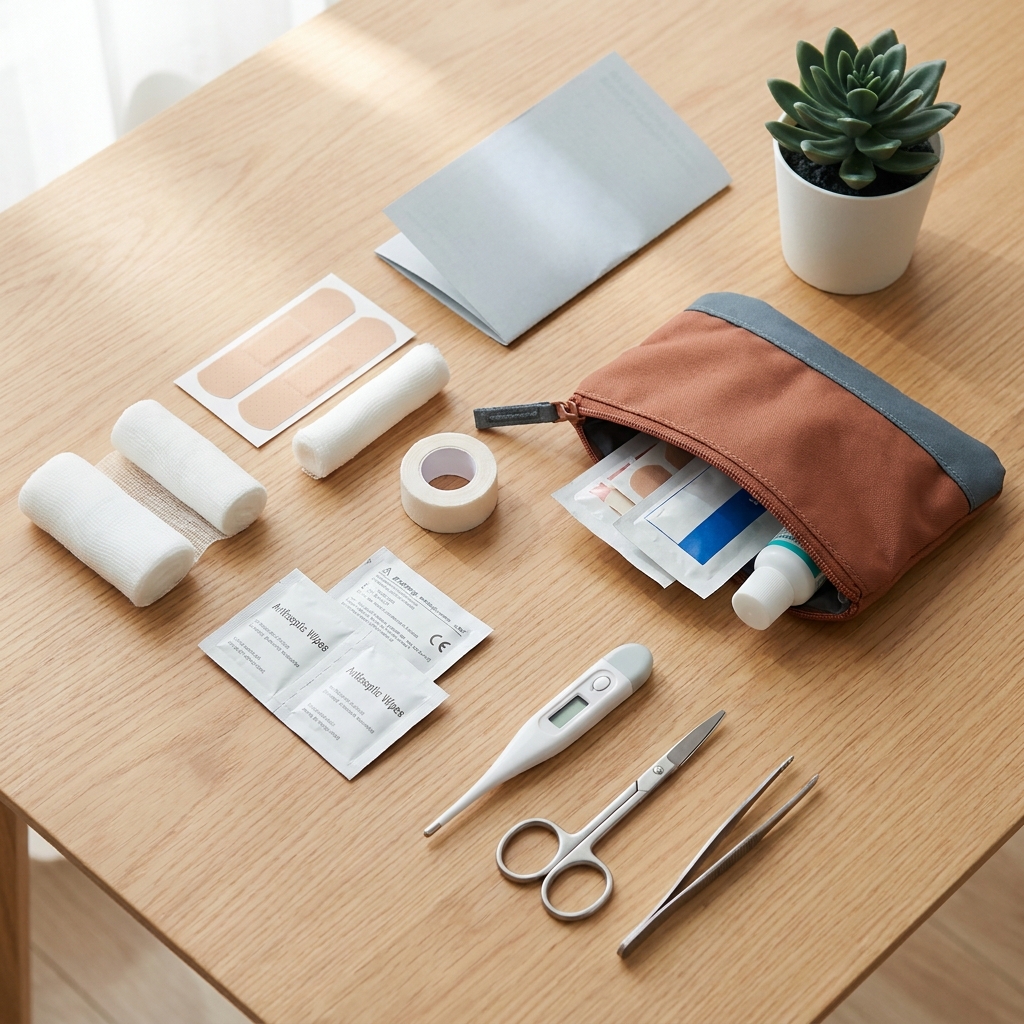
- Bandages and wound care: assorted adhesive bandages, sterile gauze pads (2x2 and 4x4), medical tape, and wound-closure strips for small cuts (CDC Yellow Book).
- Cleaning and protection: antiseptic wipes or solution and a small tube of antibiotic ointment for minor cuts and scrapes (Cleveland Clinic).
- Useful tools: tweezers for splinters, stingers and ticks; small bandage scissors; self-adhesive or elastic wrap for minor sprains; non-sterile gloves; a digital thermometer (Cleveland Clinic; CDC Yellow Book).
- Blister care: moleskin or adhesive felt/gel pads to prevent or cushion blisters (CDC Yellow Book).
If carrying scissors in hand luggage, TSA permits scissors with blades less than 4 inches from the pivot point; pack larger scissors in checked baggage (CDC Yellow Book).
Medicines and prescriptions
- Pain and fever: acetaminophen or ibuprofen; bring children’s formulas if needed (Cleveland Clinic).
- Allergies and colds: a non-drowsy antihistamine; consider a decongestant for flight ear pressure if appropriate (CDC Yellow Book).
- Skin relief: 1% hydrocortisone cream; aloe vera gel for sunburn (Cleveland Clinic).
- Stomach and motion: an antacid, loperamide for non-bloody diarrhea, a mild laxative if you’re prone to constipation, and motion sickness medicine (CDC Yellow Book).
- Prescriptions: carry all regular medications in original labeled containers and bring a current list of names and doses. Some countries restrict quantities of controlled medicines; check requirements before you go (CDC Yellow Book).
- As advised by your clinician and itinerary: an epinephrine auto-injector if you have a history of anaphylaxis; an antibiotic for travelers’ diarrhea or malaria chemoprophylaxis if indicated (CDC Yellow Book).
Traveling with devices like a CPAP? See our practical guide to packing power and supplies: Flying with a CPAP: bag, battery and power.
Adapt for destination and activities
- Outdoor and hiking: add insect repellent, sunscreen, and extra blister care; pack oral rehydration salts if you’ll be in hot climates or far from shops (CDC Yellow Book).
- Remote or expedition travel: consider a compact first aid guide and a space (thermal) blanket; tactical tourniquets appear in expanded kits for severe limb bleeding and are typically carried by guides with advanced training (CDC Yellow Book).
- Road trips: instant cold packs can help with bumps and sprains, and a space blanket adds warmth in breakdowns or emergencies (Cleveland Clinic; CDC Yellow Book).
- Kids in tow: include dosing syringes or a medicine cup and age-appropriate medicines; kid-friendly bandages can help with cooperation (CDC Yellow Book; CHKD).
- International and rural trips: add water purification tablets or a device if clean water may be unreliable (CDC Yellow Book).
Pack and use your kit safely
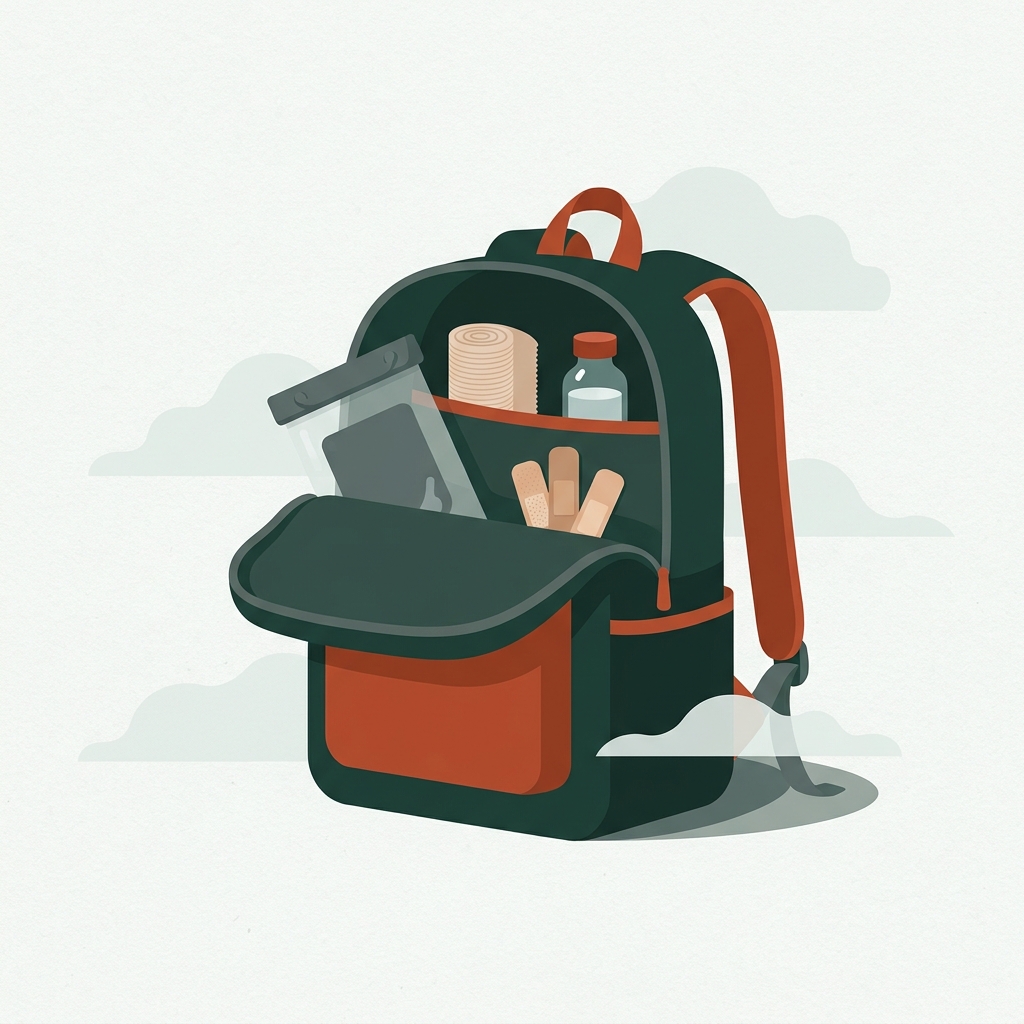
- Container and access: store items in a durable, water-resistant pouch and keep it readily accessible during the journey (CDC Yellow Book).
- Clean hands: carry hand sanitizer with at least 60% alcohol and use it before wound care (Cleveland Clinic).
- Labels and dosing: keep medications in original packages, follow dose instructions, and discard expired items (Cleveland Clinic).
- Documents to carry: a medication and allergy list, emergency contacts, insurance details, and relevant vaccination documentation (CDC Yellow Book).
- Liquids when flying: pack small liquids and gels in line with airline rules; see our guide on carry-on liquids: Does toothpaste count as a liquid for carry-ons?
Remember: a travel first aid kit is for minor problems; seek medical care for serious injuries and illnesses (Cleveland Clinic).
Travel first aid kit: pack and prep checklist
Short FAQ
Can I carry first aid scissors in my hand luggage?
Yes, TSA permits scissors with blades under 4 inches from the pivot point in carry-ons; larger scissors belong in checked baggage (CDC Yellow Book).
Do I need oral rehydration salts (ORS)?
They are a smart add if you’ll be in hot climates, traveling with kids, or somewhere gastrointestinal illness would be hard to manage. The CDC Yellow Book lists oral electrolyte solution powder as a useful personal kit item (CDC Yellow Book).
What about high-altitude trips?
Ask your clinician if acetazolamide is appropriate and carry it only if prescribed; the CDC Yellow Book includes it among prescription items for altitude illness when indicated (CDC Yellow Book).

Related guides
Product options for this topic
As an Amazon Associate I earn from qualifying purchases. These are researched options, not hands-on test results. Check the exact size or model, current price and availability on Amazon.
| Product option | Fit and limits to check | Retailer |
|---|---|---|
| Eagle Creek Pack-It Reveal, medium cube | A packing-cube option for separating clothing inside a bag. Compare the cube’s dimensions with usable bag space; it does not increase baggage allowance. | View on Amazon |