
The journal
Which side of the suitcase do shoes go on? Practical packing advice
how to pack shoes in suitcase, protect clothes and balance weight with simple placement and packing tips for carry-on and checked bags.
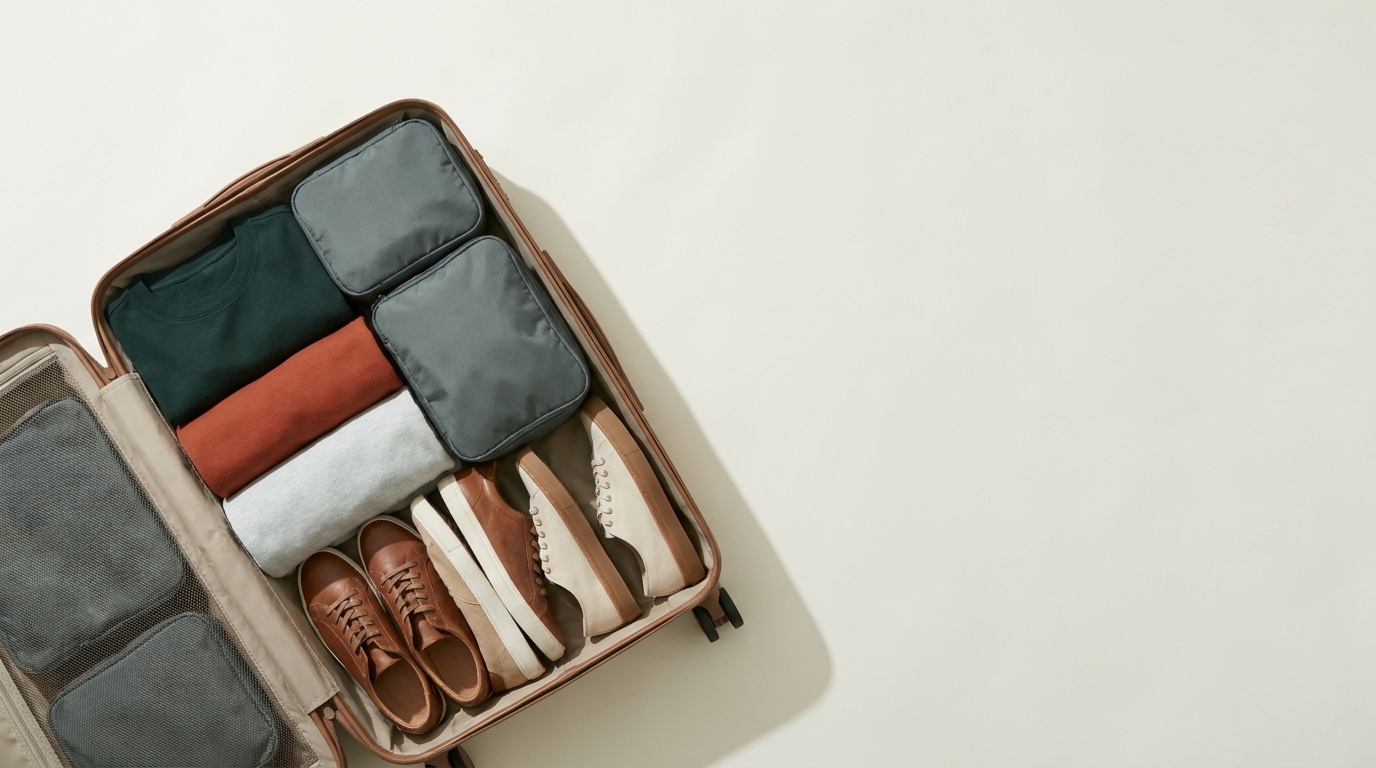
Short answer: which side of the suitcase should shoes go on?
The short answer is to place shoes on the side of the suitcase closest to the wheels, with heavier pairs set low and toward the wheel base to protect clothes and improve balance; this placement minimizes movement, keeps clothing cleaner, and makes the bag easier to roll.
For most travelers, that means shoes sit along one long edge of the suitcase or at the bottom of the pack compartment when the case stands upright, not loose on top of folded garments.
Quick verdict
Put heavier pairs near the wheel end and lighter shoes toward the center or top, and always separate shoes from delicate clothing with a barrier such as a shoe bag, packing cube or a layer of clothing.
When a short answer is enough
This simple placement protects clothes from dirt and crush damage, helps the suitcase stay stable during handling, and makes a heavy bag easier to roll and lift. For more on placing shoes at the bottom for balance see this guide.

Why shoe placement matters: protection, weight and airline rules
Where you put shoes affects three practical things: protecting garments from dirt and scuffs, maintaining weight distribution so the suitcase rolls and stands stably, and following airline or security expectations about packed items.
Shoes with dirty soles can soil folded clothing if left loose among garments, while heavy boots can compress softer items if they sit in the middle of a packed case. Placing heavier items near the wheels lowers the center of gravity and reduces the chance the suitcase tips when upright.
Protecting clothes and preventing odor transfer
Separating shoes from clothes keeps dirt, grit and residual moisture away from fabrics. A thin barrier like a shoe bag or a zip-top plastic bag is usually enough for dry shoes; for wet or muddy pairs choose a more water-resistant cover and isolate them at the edge of the bag so cleaning is easier on arrival. For advice on cleaning and preparing shoes before packing, see how to clean and stuff shoes.
Balanced weight helps handling and avoids suitcase tipping
Pack heavy shoes low and toward the wheels or toward the base of a duffel. When weight sits near the wheel end, the suitcase's load is supported where the wheels and handle can control it, and lifting the case into a car or overhead bin becomes more predictable.
Checked versus carry-on considerations
Checked bags allow more freedom to place bulky or heavy shoes low in the main compartment, while carry-on limits may require tighter packing and placing shoes along one side to preserve space and access. Always check the carrier's size and weight limits and TSA guidance for any items you plan to carry on.
Step-by-step: how to pack shoes in suitcase for a neat, balanced bag
Materials and small gear to use first
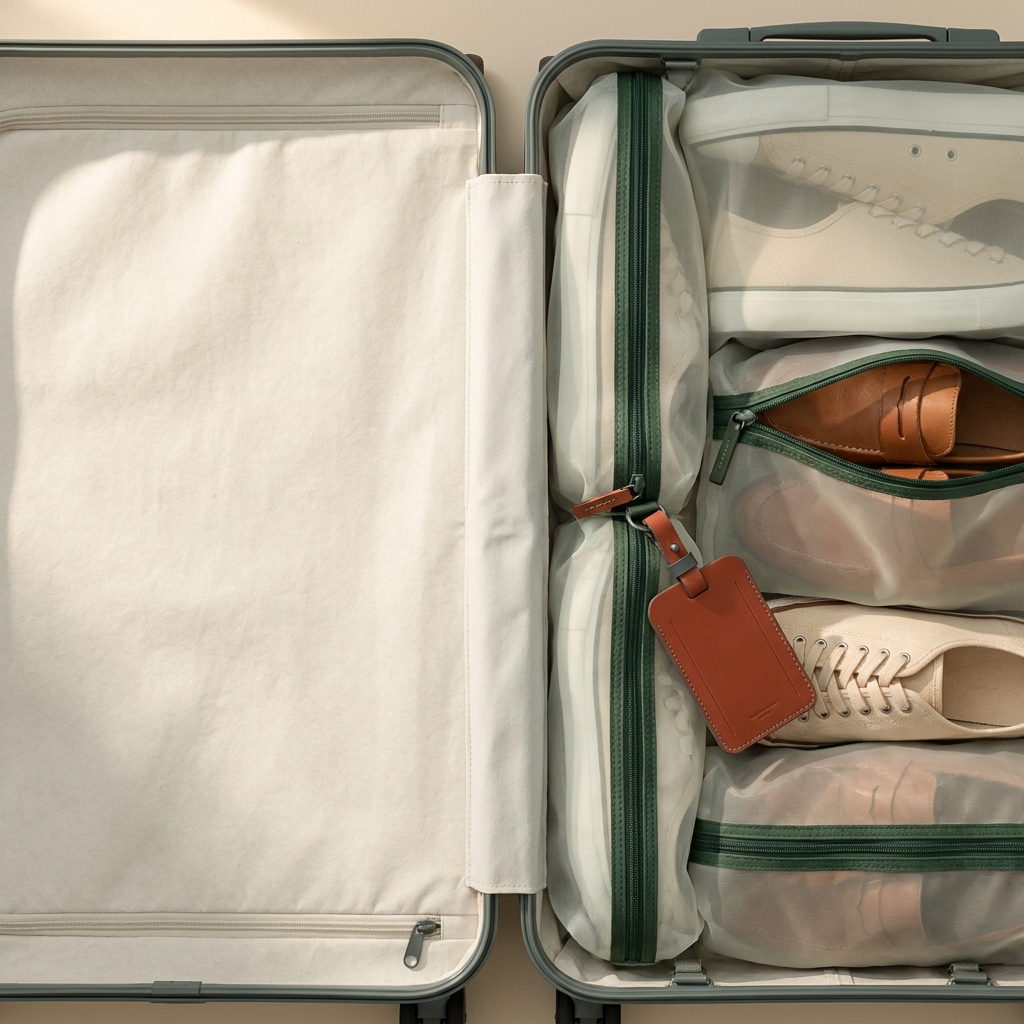
Gather a few simple items before you start: shoe bags or zip-top plastic bags, packing cubes, a couple of socks or tissue paper to stuff shoe toes, and optional shoe trees for formal pairs. These items protect shape, control odor and make arrangement easier.
Clear a flat surface and sort shoes into heavy, medium and light categories. Heavy equals thick-soled boots or hiking shoes; medium includes sneakers and casual shoes; light covers sandals and thin flats.
Step 1: Prepare shoes. Wipe off dirt, let moist shoes dry if possible, then stuff toes with socks or tissue to keep shape. Slip each pair into a shoe bag or sealed plastic bag. For step-by-step cleaning and stuffing tips see this guide.
Step 2: Choose the suitcase side. Place pairs along the long edge that will rest by the wheels when the suitcase stands upright. In a top-loading bag put shoes at the bottom, toes pointing toward the center so heels align with the outer edge.
Which side of the suitcase should shoes go on for best balance and protection?
Put shoes along the side that will be at the wheel base, with heavier pairs low and toward the wheels and lighter pairs toward the center or top, and always separate shoes from clothes with bags or padding.
Step 3: Arrange heels and toes. For most closed sneakers and casual shoes, position them heel-to-toe so pairs interlock and use less width. For bulky boots set both boots with heels together near the wheel base to keep weight low. Many packing guides recommend the toe-to-heel or heel-to-toe interlock for efficient use of space, as shown in toe-to-heel packing.
Step 4: Layer and secure. Put a thin layer of clothes between shoes and delicate items. Use a packing cube for garments above shoes, and secure everything with the suitcase compression straps if present to stop shifting. If you want a planning aid, try the packing planner to map a layout before you zip the case.
Four-step packing sequence with photos suggested
1. Clean and bag each pair. 2. Place heavy shoes at the wheel end. 3. Interlock shoes heel-to-toe along the chosen side. 4. Cover with a packing cube or folded garments and fasten straps to lock the layout.
For carry-on tweaks compress carefully and keep one carry outfit accessible near the top; for checked bags you can place bulkier shoes lower and use more protective wraps for dress shoes.
Carry-on specific tweaks
With a carry-on, size limits often make shoe placement a balance between space and weight. Put one small pair along the inside edge and one light pair midway, or slide a single heavier pair low near the wheels if the bag design allows it. See our carry-on packing guidance for examples and layouts.
Keep a basic outfit and any essential toiletries near the top so you can reach them without unpacking shoes. If you need to show contents at security, having shoes neatly side-lined speeds the process.
How to decide where shoes go: checklist by trip type and shoe type
A short decision checklist to place shoes by trip and shoe type
Short trips and carry-on only
For a weekend with carry-on only, limit yourself to two pairs: one versatile shoe for daytime and one pair for evening. Place the daytime pair low along the wheel edge if the bag design allows, and slide the evening pair nearer the center or top inside a dust bag to keep it clean.
If you must pack a third pair, choose a very light option and tuck it into gaps around packing cubes rather than letting it rest loose on top of clothing.
Checked luggage, long trips and bulky shoes
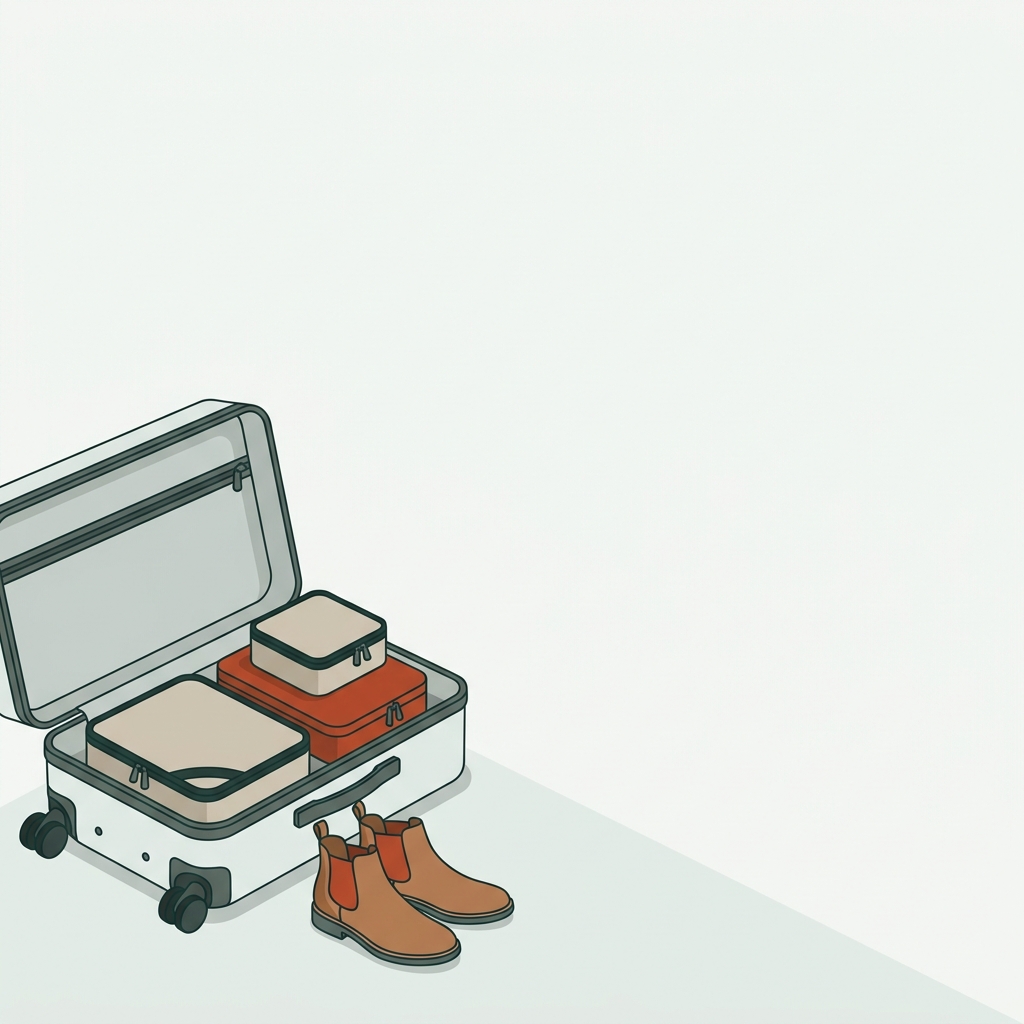
For longer trips or when checking a suitcase, heavier pairs like hiking boots or winter shoes should sit at the wheel end and be secured so they do not press into softer items. Use a dedicated shoe compartment if your suitcase has one, or place shoes in individual bags and line them along one side.
When space is abundant, place delicate dress shoes centrally with soft clothing on both sides for cushioning. This lowers the risk of dents and scuffs during airline handling.
Special cases: wet shoes, formal shoes and sandals
Wet or muddy shoes need a water-resistant bag and placement at the outer edge or bottom so you can isolate them and wipe the case area if needed. For formal shoes wrap each in tissue or a dust bag and place them in a packing cube in the middle layer of the suitcase for protection.
Sandals and thin flats compress easily and can fill gaps; stow them near the top or inside packing cubes with socks to save space and prevent abrasion on dress garments.
Common mistakes and how to avoid them
Top packing errors with shoes
Putting shoes loose on top of clothes lets dirt transfer and increases the chance of garments being crushed. Storing heavy shoes in the middle can make the suitcase lopsided and hard to roll or lift.
Another common error is packing wet shoes without any barrier; this can soil fabrics and leave a musty smell that is hard to remove while traveling.
Easy fixes and preventive habits
Always bag shoes, even a lightweight pair, and place heavy shoes near the wheel base. Stuff toes to maintain shape and slide a thin layer of clothing between shoes and delicate fabrics to prevent creasing.
Before packing, clean and dry shoes and keep a small shoe-cleaning kit in your travel gear for quick touch-ups on the road. These simple habits prevent most damage and odor problems.
Practical examples and a quick packing checklist to finish
Example 1: weekend city trip with carry-on only
Pack one pair of casual walking shoes and one pair of nicer flats. Put the walking shoes at the bottom along the wheel edge, bagged and with toes stuffed. Place the flats inside a dust bag between folded shirts and the top packing cube so they remain accessible and protected.
Keep a lightweight outfit and toiletries near the top for quick access, and use socks to fill any gaps around shoes so nothing shifts in transit.
Example 2: week-long trip with checked luggage
Pack hiking boots or heavy shoes in the main compartment at the wheel base, each in a robust bag. Place dress shoes centrally wrapped in tissue inside a packing cube, and arrange everyday shoes along one side. Cover shoes with a layer of folded clothes and lock the arrangement with compression straps.
For muddy or wet footwear choose the outermost position so you can remove and clean them on arrival without unpacking the entire suitcase.
Printable quick checklist to follow before zipping
1. Clean and dry shoes. 2. Bag each pair. 3. Stuff toes as needed. 4. Place heavy shoes at wheel end. 5. Interlock pairs heel-to-toe where possible. 6. Put delicate shoes centrally with padding. 7. Secure with packing cubes or straps. 8. Keep one outfit accessible in carry-on. 9. Isolate wet shoes at edge. 10. Do a final weight check and adjust if needed.
Testing this layout at home before departure lets you spot awkward pressure points or access problems, and gives you confidence the bag will behave as expected when traveling.
In short, choose the side nearest the wheels for heavier shoes, keep lighter pairs toward the center or top, and use bags or packing cubes to protect clothes and preserve shoe shape.
Frequently asked questions
Can I pack shoes loose if they are clean?
It is best to bag shoes even if clean to prevent scuffs and transfer of dirt; use a shoe bag or plastic bag for separation.
Should heavy boots go at the top or bottom of the suitcase?
Place heavy boots low and toward the wheel base to lower the center of gravity and keep the bag stable.
How do I handle wet or muddy shoes when packing?
Put wet shoes in a water-resistant bag, isolate them at the outer edge or bottom, and avoid placing them near delicate garments.
The practical rule is consistent: keep heavier footwear low and toward the wheel end, separate shoes from clothing, and secure everything with packing cubes or straps. Testing this approach once at home will make packing faster and reduce surprises on the road. If you travel often, assemble a small shoe kit with bags, a cloth and a filler tool to make the routine smooth and dependable.
References
- https://travelpro.com/blogs/the-travelpro-blog/how-to-pack-shoes-in-suitcase
- https://www.southernliving.com/how-to-pack-shoes-in-suitcase-12061647
- https://www.apartmenttherapy.com/how-to-pack-shoes-in-suitcase-37497718
- https://cabinandcarry.com/tools/packing-planner
- https://cabinandcarry.com/packing/pack-carry-on-two-weeks
Product options for this topic
As an Amazon Associate I earn from qualifying purchases. These are researched options, not hands-on test results. Check the exact size or model, current price and availability on Amazon.
| Product option | Fit and limits to check | Retailer |
|---|---|---|
| Peak Design Packing Cube, medium Charcoal | A compression-cube candidate for dividing clean and used clothing. Check the exact size and packed weight; compression saves space, not mass. | View on Amazon |
| Eagle Creek Pack-It Reveal, medium cube | A packing-cube option for separating clothing inside a bag. Compare the cube’s dimensions with usable bag space; it does not increase baggage allowance. | View on Amazon |