
The journal
Does toothpaste count as a liquid for carry-ons? A practical guide
packing liquids carry on bag: Learn whether toothpaste counts as a liquid for carry-on screening, exceptions, packing steps, and smart alternatives.
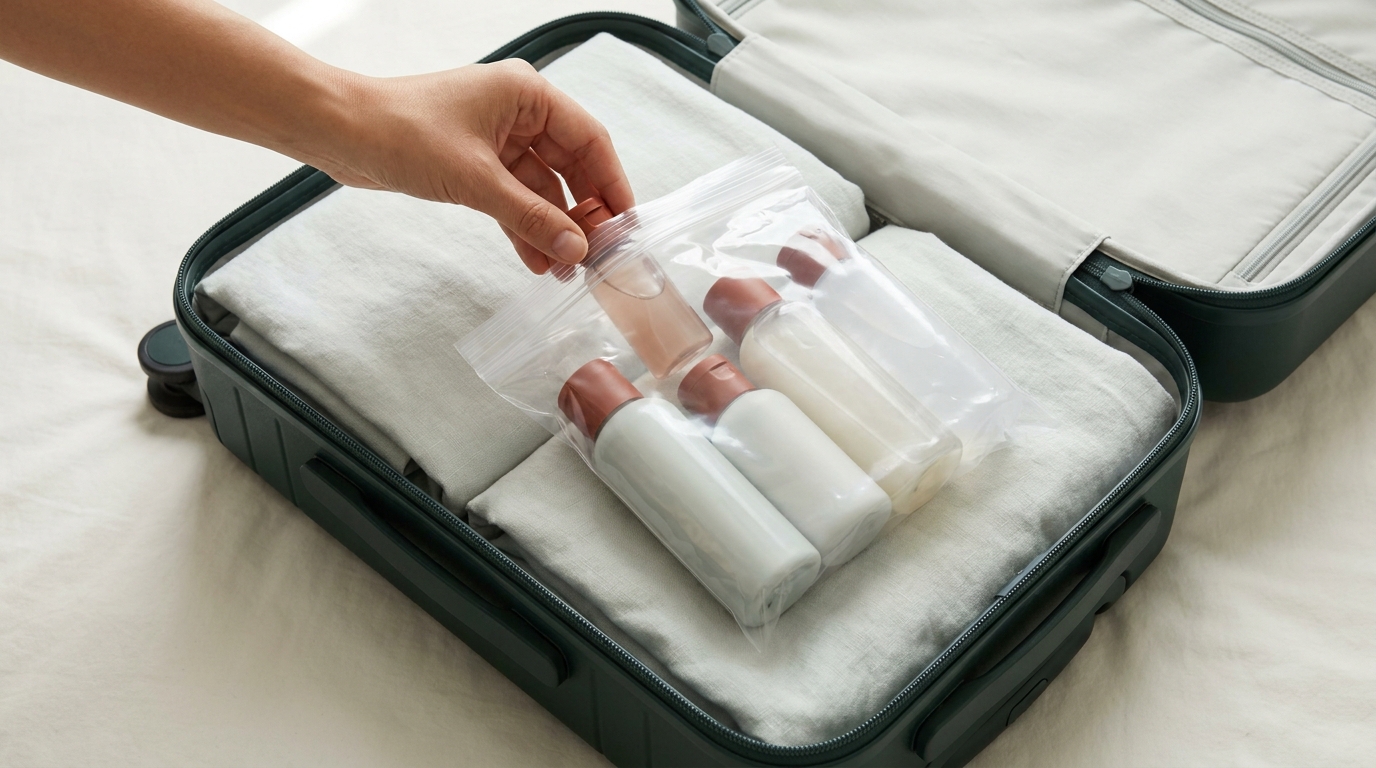
Quick answer: Does toothpaste count as a liquid in your carry-on?
Short answer: In the United States, toothpaste is treated as a paste and falls under the TSA liquids policy, so a tube you plan to carry in your hand luggage should be 3.4 oz or 100 ml or smaller and fit inside a single transparent quart-size resealable bag for screening. See the official TSA liquids guidance for details TSA liquids rule.
One-sentence summary for travelers in a hurry: Pack travel-size tubes, keep all liquids and pastes in one quart bag, and declare any medical or child care exemptions at the checkpoint.
Does toothpaste count as a liquid for carry-ons?
In the U.S., toothpaste is treated as a paste and is subject to the TSA 3-1-1 carry-on limits, so tubes should be 3.4 oz or 100 ml or smaller and fit inside a single quart-size resealable bag; exceptions for medical and child care items apply when declared.
If you need a quick action: pull your quart bag to the top of your carry-on and be ready to show it at security. The TSA expects passengers to present liquids, gels, creams, aerosols, and pastes together in the one permitted quart bag at the screening line TSA liquids rule (see TSA FAQ).
Why toothpaste is treated as a paste and what that means for screening
How the rule works: the TSA groups toothpaste with liquids, gels, creams, and pastes for checkpoint screening, so the same container-size limit applies and the item counts toward your one quart-size bag allowance TSA toothpaste guidance.
That classification is practical rather than chemical: paste-like personal care items are treated the same as liquids for screening purposes, which is why a tube of toothpaste, even when mostly empty or opened, still needs to meet the container-size limit and be packed in the quart bag TSA liquids rule.

Screening at the checkpoint usually means placing the quart bag in a bin or on the conveyor belt as you approach the X-ray, so pack items where they are easy to remove and return. Expect TSA officers to ask you to remove the quart bag from your carry-on and place it in a screening bin for imaging and potential inspection TSA liquids rule.
Operational detail to watch: the 3.4 oz or 100 ml per-container limit applies regardless of tube shape, and multiple eligible items must still fit inside the single quart bag you bring to the checkpoint, so size and organization matter for smooth screening TSA liquids rule.
Step-by-step: How to pack toothpaste in your carry-on
1) Choose the right tube: buy or transfer toothpaste into containers labeled 3.4 oz or 100 ml or smaller when you plan to place them in a carry-on; this makes them compliant with the TSA 3-1-1 expectations for screening and can save time at the checkpoint. For an official reference on what counts, consult the TSA toothpaste guidance TSA toothpaste guidance.
2) Layer your toiletries: put toothpaste with other compatible liquids, gels, creams, and pastes in a single transparent quart-size resealable bag and keep that bag near the top of your packed carry-on so you can remove it quickly at security. The TSA outlines that passengers are allowed one quart bag per person at the checkpoint TSA liquids rule.
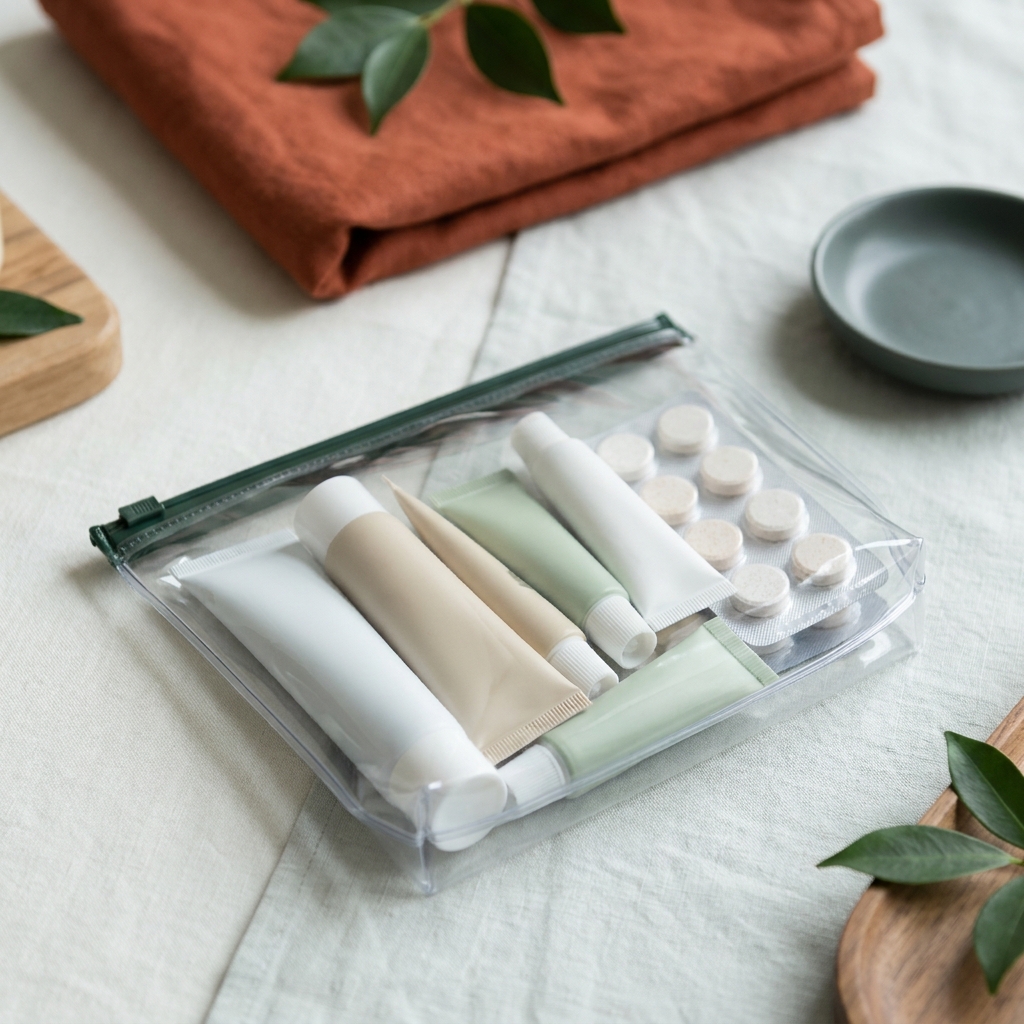
3) Fit multiple items efficiently: arrange small tubes upright, nest compact containers, and use soft-sided tubes to make the most of limited quart-bag space. Keep the contents easy to inspect and make sure the quart bag closes comfortably. See our packing cube layout for compact arrangements.
4) Keep the bag accessible: place the quart bag where you can pull it out without unpacking your entire carry-on. Follow the officer’s instructions about removing the bag; procedures can vary by screening lane, and having it handy speeds the process and reduces handling time for your items.
5) Consider solid toothpaste alternatives: toothpaste tablets and solid bars are generally not treated as liquids, gels, or pastes and typically do not need to go in the 3-1-1 quart bag, which can free up space if you prefer solid options while traveling TSA toothpaste guidance.
Mini packing checklist: 3.4 oz or 100 ml or smaller tube, single clear quart bag, bag accessible at the top of your carry-on, and solid toothpaste tablets if you want to avoid the 3-1-1 bag entirely. See our packing guide for more tips.
Exceptions and special cases: medications, disabilities, and travel with children
Medically necessary liquids: passengers may carry medications and medically necessary liquids in quantities greater than 3.4 oz, but these items must be declared to the TSA officer and will undergo additional screening; notify the officer as you approach the checkpoint TSA medications guidance.
When traveling with infants or young children: breast milk, formula, and juice for child care are exempt from the 3-1-1 limit and can be carried in reasonable amounts, but they must be presented separately for inspection at the security checkpoint TSA traveling with children.
Travelers with disabilities or medical conditions should review TSA guidance on additional screening procedures and consider carrying documentation that explains the need for certain liquids or devices; documentation can help clarify the need during inspection but is not strictly required for all items TSA medications guidance.
Practical step for declaration: as you approach the security line, tell the TSA officer you have medically necessary liquids or child care items to declare, place them separately if requested, and be ready for an officer to swab or X-ray the item as part of standard screening procedures TSA traveling with children.
International travel: when rules differ and how to check local guidance
Many countries use a 100 ml per-container limit for hand luggage that aligns with the TSA equivalent of 3.4 oz, but airport-level rules and screening technology vary, so a tube that is fine in one country may be handled differently at another airport UK hand luggage guidance.
Canada and other nations generally apply similar 100 ml controls, though local airports can set procedures that affect how strictly sizes are enforced; reviewing the departing airport's official guidance is the reliable way to confirm limits for your trip CATSA liquids guidance.
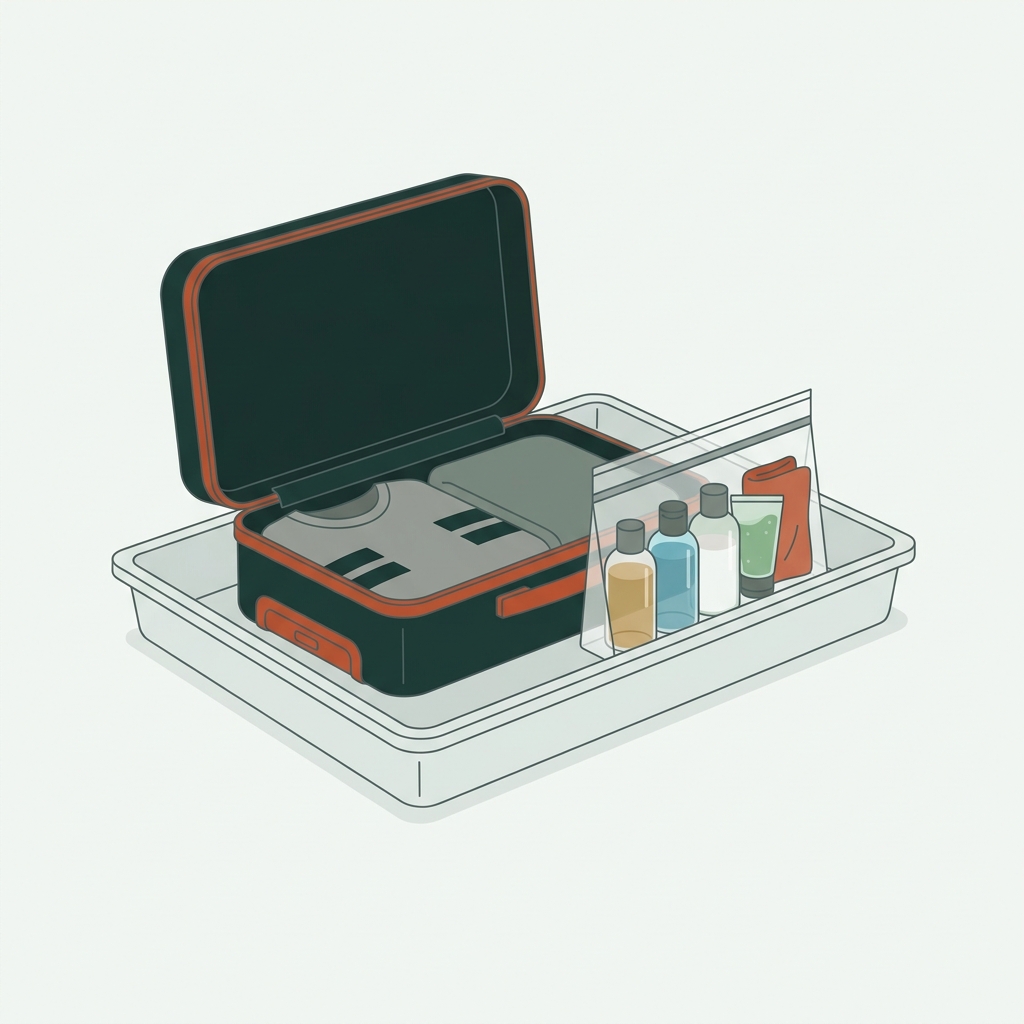
How to verify rules: check the national aviation security agency or your departure airport website for up-to-date hand-luggage restrictions, search for "liquids" or "hand luggage restrictions," and look for clear statements about milliliter limits and allowed exemptions. When in doubt, pack travel-size containers or use solid toothpaste alternatives to reduce the chance of a problem at an unfamiliar checkpoint, or consult our trip planner.
Timing tip: review the departing country guidance at least a day before travel so you have time to buy compliant travel-size items or transfer toothpaste into a permitted container.
Common packing mistakes and a final quick checklist
Mistakes to avoid: packing full-size toothpaste tubes in carry-on luggage, forgetting to place liquids and pastes in a single quart bag, failing to declare medically necessary liquids or child care items, and burying the quart bag deep inside carry-on luggage where it is hard to access at screening TSA liquids rule.
Another frequent error is assuming solid toothpaste bars or tablets are treated the same as tubes; solid formats are usually not subject to the 3-1-1 bag rule and can be a space-saving alternative, but check local rules for international flights to be sure TSA toothpaste guidance.
Final quick checklist to follow at packing time: pick toothpaste in containers 3.4 oz or 100 ml or smaller, place all liquids and pastes in one clear quart bag, keep that bag accessible, declare any medically necessary liquids and child care items at the checkpoint, and consider solid toothpaste tablets to reduce bulk.
Recap: treating toothpaste as a paste means it counts toward your liquids allowance for carry-on screening, but simple packing choices and awareness of exemptions make compliance straightforward and usually quick at the security line.
Frequently asked questions
Can I bring a full-size tube of toothpaste in my carry-on?
No, in the U.S. a full-size tube that exceeds 3.4 oz or 100 ml must be packed in checked luggage unless it is a medically necessary item that you declare and have screened separately.
Are toothpaste tablets allowed in carry-on luggage?
Yes, solid toothpaste tablets are generally not treated as liquids, gels, or pastes and typically do not need to go in the quart bag, though you should confirm rules for your departure country.
What should I tell a TSA officer if I have breast milk or formula?
Tell the officer you are carrying breast milk or formula for an infant or young child, present it separately for inspection, and expect additional screening steps without the 3-1-1 volume limit.
Following these simple packing steps and being ready to declare exceptions will make security screening faster and less stressful. A little planning the night before travel keeps toothpaste and other toiletries from becoming a checkpoint headache.
References
- https://www.tsa.gov/travel/security-screening/liquids-rule
- https://www.tsa.gov/travel/security-screening/whatcanibring/items/toothpaste
- https://www.tsa.gov/travel/tsa-cares/disabilities-and-medical-conditions
- https://www.tsa.gov/travel/special-procedures/traveling-children
- https://www.tsa.gov/travel/frequently-asked-questions/liquids-aerosols-and-gels-rule
- https://www.gov.uk/hand-luggage-restrictions
- https://www.catsa-acsta.gc.ca/en/what-can-bring/liquids-non-solid-food-personal-items
- https://cabinandcarry.com/travel-accessories/packing-cube-layout
- https://cabinandcarry.com/packing
- https://cabinandcarry.com/tools/trip-planner