
The journal
How to tell if your luggage is over 50 pounds without a scale — practical checks
how to weigh luggage at home using simple household references and lift tests, plus a quick airline checklist to avoid unexpected 50 lb charges.
Quick answer and why it matters
At-a-glance answer: how to weigh luggage at home
Short answer: many major U.S. carriers publish a 50 lb (23 kg) standard checked-bag limit for economy, and exceeding that commonly triggers overweight charges; you can estimate whether your bag is over 50 pounds at home with a few low-tech checks before you leave for the airport. United Airlines checked-baggage page. United's checked-bag policy
How can I tell if my luggage is over 50 pounds without a scale?
Use household references like gallon jugs (about 8.34 lb each), a two-person lift test, and a final check of your airline’s published baggage limits to estimate whether your bag is likely over 50 lb before you leave home.
Who sets baggage weight rules
Airlines set baggage weight and fee rules, not the Transportation Security Administration, and the Department of Transportation advises travelers to confirm carrier fees and limits for their route and ticket class before travel. U.S. Department of Transportation baggage guidance
Why this matters: a quick at-home estimate can save time, reduce surprises at the airport counter, and help you decide whether to redistribute items, upgrade your fare, or switch to a lighter bag. Many carriers also have upper acceptance thresholds where a bag over a certain weight may be refused or incur higher fees.
Simple at-home methods to estimate weight without a scale
Lift tests: how they work and limitations
A practical starting point is a two-person lift test: have one person lift the packed bag while another supports and gauges the effort. Count how many seconds the lifter can hold it at waist height; if it is very difficult to hold for more than a few seconds, that suggests the bag may be heavy enough to trigger an overweight fee. Use this test only as a qualitative check, not a precise measurement.
When doing a lift test, compare the feel of the bag to a known household weight you can lift comfortably. If one person can hold the bag as easily as a full case of bottled water or a stack of similarly weighted items, you have a practical basis for an estimate. Avoid twisting and lift with both legs to reduce injury risk when testing heavy suitcases.
Limitations: lift tests are subjective, depend on the lifter’s strength, and can misjudge dense items that are compact yet heavy. For best results combine a lift test with at least one physical reference weight described below.
Household reference weights you can use
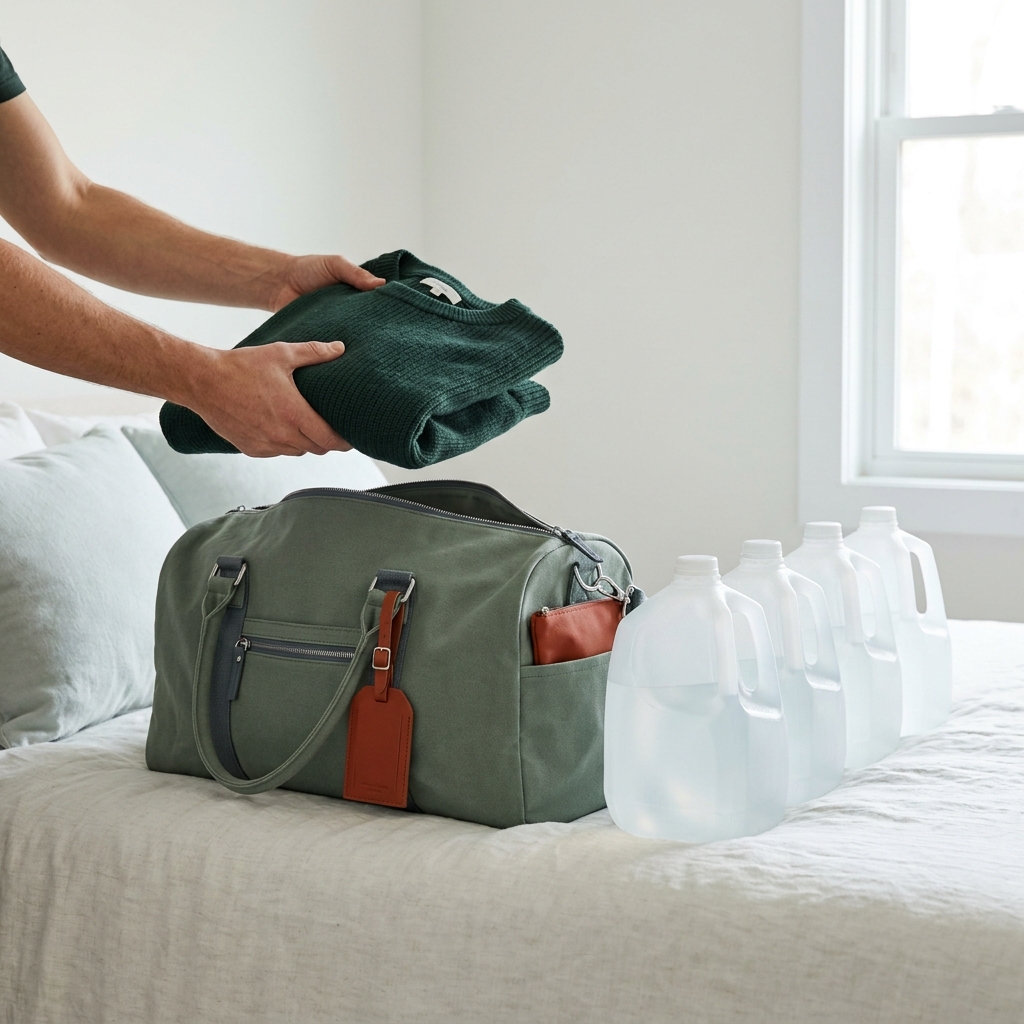
A reliable, repeatable reference is a U.S. gallon of water. A U.S. gallon weighs about 8.34 pounds, so roughly six gallons equal approximately 50 pounds; using gallons as a reference helps you build a quick, mental benchmark you can compare to your packed bag.
How to use the gallon method: collect empty gallon jugs or replaceable containers (or full ones if you can spare the water), and place one at a time into your suitcase while accounting for the bag’s own weight. If you add roughly six full gallon containers and the bag feels close to the weight of six gallons, you are near the 50 lb threshold. This method works because the math is simple and most households can access gallon containers.

Other household references include: a standard bag of flour or sugar labeled 5 lb, a bag of dog food with a printed weight, or a heavy textbook whose weight you know. Use these to build incremental estimates: combine two 5 lb bags plus three gallon jugs, for example, to reach a rough total. Remember that container weights and packing distribution change perceived heft.
Practical safety note: never attempt to lift a packed bag alone that feels uncomfortably heavy. If a reference test shows the bag is close to or above the 50 lb mark, redistribute items or remove heavy containers rather than risking injury.
Practical examples: translate household weights into suitcase decisions
Example 1: backpacks and small checked bags
Imagine a small checked bag that feels roughly as heavy as five full gallon jugs plus the bag itself. Five gallons weigh about 41.7 lb, so adding the bag’s own shell and wheels could push the total toward or above 50 lb depending on the bag’s empty weight. Use this comparison to decide whether to remove a pair of shoes or a toiletry bottle.
When you estimate using gallons, be conservative: a bag shell and hardware commonly add several pounds. If your reference test shows closeness to five or six gallons, plan to lighten the sack slightly to avoid the risk of an overweight fee.
Example 2: weeklong packing for two in one bag
For a weeklong trip for two where you plan to share one large checked bag, estimate the main heavy categories: shoes, toiletries, electronics, and outerwear. See our guide to packing for two weeks. A pair of heavy shoes can be 3 to 5 lb each, a full toiletry kit may be 4 to 8 lb if you include liquids, and chargers and cameras add a few pounds. Tally these known items first, then use the gallon method or lift test to check the remaining packed weight.
If your tallies and reference checks show you are approaching the 50 lb mark, consider redistributing heavier items into carry-on allowances or removing a bulky item. These choices are often easier at home, where you can reorganize calmly rather than at the airport counter under time pressure.
Note that checked-bag linear size limits also matter: most carriers cap overall linear size around 62 in (158 cm). Packing denser, heavier items into a bag that already approaches that size can increase the likelihood of both size and weight fees, so use both dimensions when deciding what to move or remove. Delta Air Lines checked-baggage information. See Delta's baggage overview here. For how to measure dimensions, see our guide on how to measure luggage dimensions.
How to check your airline's exact limits and fees before you pack
Where to find official baggage weight and size rules
Before you finalize packing, check the airline’s official checked-baggage policy page for the route and fare class you bought; published limits and fees vary by carrier, route, and ticket type, and carriers commonly publish a 50 lb standard for economy checked bags while also noting higher refusal thresholds near 70 lb for some ticket types. American Airlines checked bag policy. For an example, see American's policy here.
Checklist to confirm on the airline page:
- Published weight limit for checked bags on your fare class
- Standard linear size limit, commonly 62 in (158 cm)
- Overweight fee levels and any refusal thresholds
- Carry-on allowances and personal item rules that affect redistribution decisions
Quick pre-pack baggage checklist to confirm carrier rules before leaving home
How to use this checklist practically: open the airline’s checked-baggage page, enter your route and fare if prompted, and note the exact weight limit, any size rules, and the fee schedule for overweight items so you can make an informed packing decision at home rather than at the airport. Or use our trip planner to collect route and bag details before you leave.
What to confirm for your ticket class and route
Some premium or business fares allow heavier checked bags without an overweight charge, while basic economy fares often enforce stricter weight and size rules. Confirm which fee band applies to your ticket and whether your route has special rules; when in doubt, contact the carrier’s customer service listed on the policy page for clarification.
Because airlines update fees periodically, check the carrier’s page shortly before departure to capture recent changes. If you see a published 50 lb standard, treat it as the baseline for economy travel and plan your at-home checks around that limit.
Common mistakes, packing pitfalls, and how to avoid them
Mistakes that lead to overweight bags
Frequent packing errors include overpacking shoes and bulky outerwear, forgetting to account for heavy gift items, and packing full toiletry bottles instead of travel-size refills. These items accumulate weight quickly and are easy to overlook when you pack in a hurry.
Another common pitfall is assuming carry-on space can absorb very heavy items; many carriers limit carry-on size and weight, and gate checks or carry-on refusals can complicate last-minute shuffling. Plan which items are essential to keep on your person versus what can go into checked luggage.
Quick fixes at home and at the airport
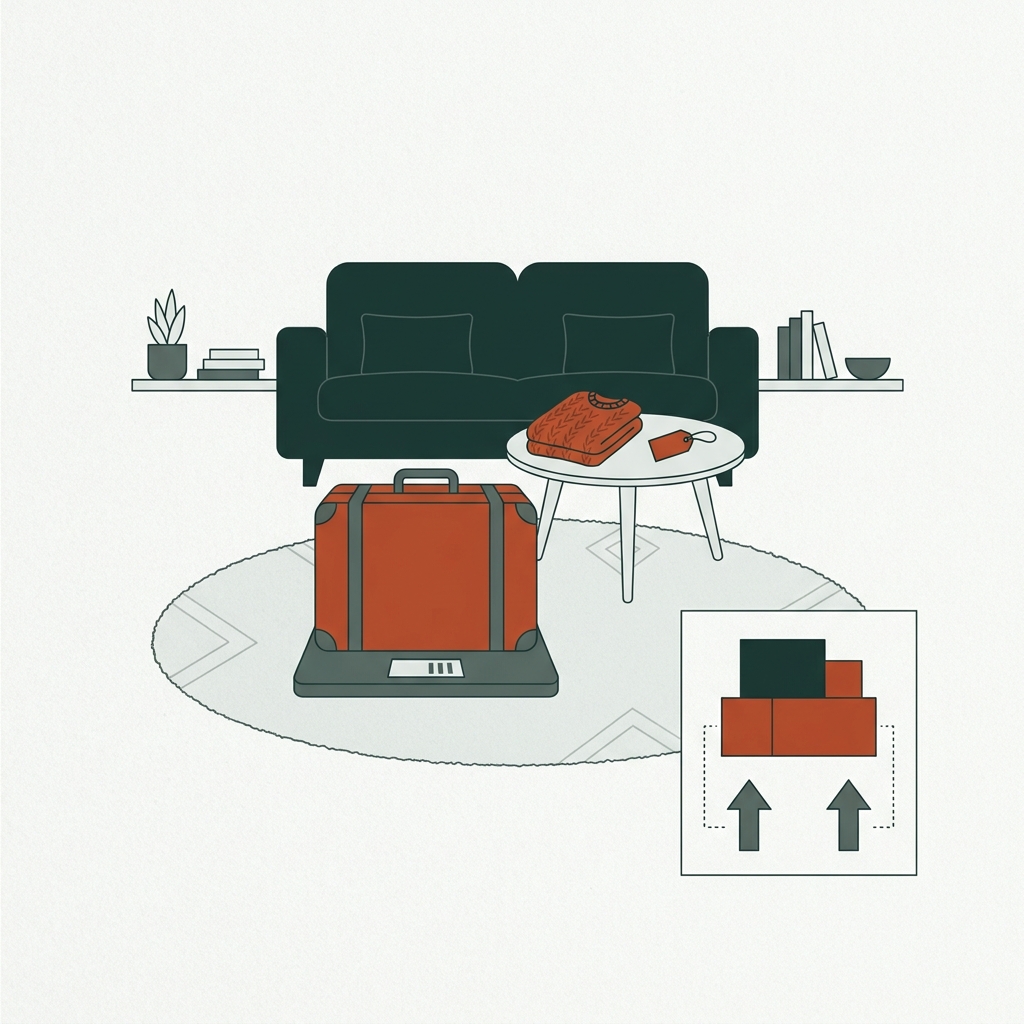
At home, remove or swap full-size toiletry containers for travel-size bottles, move heavy shoes into a personal item packed under a seat, or split shared items across two checked bags when feasible. These changes are often quick and effective at reducing checked weight below 50 lb.
At the airport, if a bag is overweight and fees are high, options include removing items into carry-on (if space and allowances permit), paying the fee, or repacking into a second bag if you have someone to help. Because fees vary, a pre-trip at-home estimate frequently saves money and stress.
Wrap-up: quick checklist and next steps
One-paragraph summary
In short, how to weigh luggage at home is a mix of simple reference weights, lift tests, and a final check of your airline’s published rules: use the gallon method or known packaged weights to build an estimate, perform a cautious lift test, then verify the carrier’s weight and fee rules so you can avoid surprises at the counter.
Suggested at-home routine before travel
Do this 24 to 48 hours before you leave: confirm your carrier’s checked-bag limit for your ticket, pack and tally heavy categories, use a gallon or two as reference and perform a lift test, and make final adjustments to redistribute or remove weight as needed. If your estimate approaches six gallons or the equivalent, assume you are near the 50 lb threshold and lighten the bag.
Final reminder: policies and fees change, so check the airline’s page again shortly before travel and use your at-home estimate to decide whether to change bags, redistribute weight, or accept the potential fee.
Frequently asked questions
Can I rely on the gallon method as an exact measurement?
No, the gallon method is an estimate useful for quick checks; it gives a practical benchmark but is not a substitute for an accurate scale.
Do all U.S. airlines use a 50 lb checked-bag limit?
Many major U.S. carriers publish a 50 lb standard for economy checked bags, but limits and fees vary by carrier, route, and fare class and should be confirmed on the airline’s site.
What if my bag is over 70 lb?
Some carriers set upper acceptance limits near 70 lb where a bag may be refused or face different handling rules; consult your airline’s checked-bag policy for specifics.
Doing a few quick checks at home — using gallons, known packaged weights, and a cautious lift test — is usually enough to tell whether a bag is likely to exceed a 50 lb limit. Pair those checks with a confirmed look at your airline’s baggage page shortly before departure, and you’ll reduce the chance of surprises and last-minute repacking at the counter. Travel lighter when you can and keep the heaviest items in predictable places so you can make small adjustments before you leave home.
References
- https://www.united.com/ual/en/us/fly/travel/baggage/checked-baggage.html
- https://www.united.com/en/us/fly/baggage/checked-bags.html
- https://www.transportation.gov/airconsumer/baggage-fees
- https://cabinandcarry.com/tools/trip-planner
- https://cabinandcarry.com/packing/pack-carry-on-two-weeks
- https://cabinandcarry.com/articles/how-to-measure-luggage-dimensions-wheels/
- https://www.delta.com/us/en/baggage/checked-baggage
- https://www.delta.com/us/en/baggage/overview
- https://www.aa.com/i18n/travel-info/baggage/checked-baggage-policy.jsp
- https://www.aa.com/web/i18n/travel-info/baggage/checked-baggage-policy.html
Product options for this topic
As an Amazon Associate I earn from qualifying purchases. These are researched options, not hands-on test results. Check the exact size or model, current price and availability on Amazon.
| Product option | Fit and limits to check | Retailer |
|---|---|---|
| Etekcity digital luggage scale | A handheld check before leaving for the airport. Leave a margin below the airline limit because scales and baggage rules can differ. | View on Amazon |