
Plan around the gap between laundry opportunities rather than packing fourteen independent outfits. Include drying time, activity changes and a spare where it is useful. Your route, clothing needs and actual baggage limits determine whether one carry-on works.
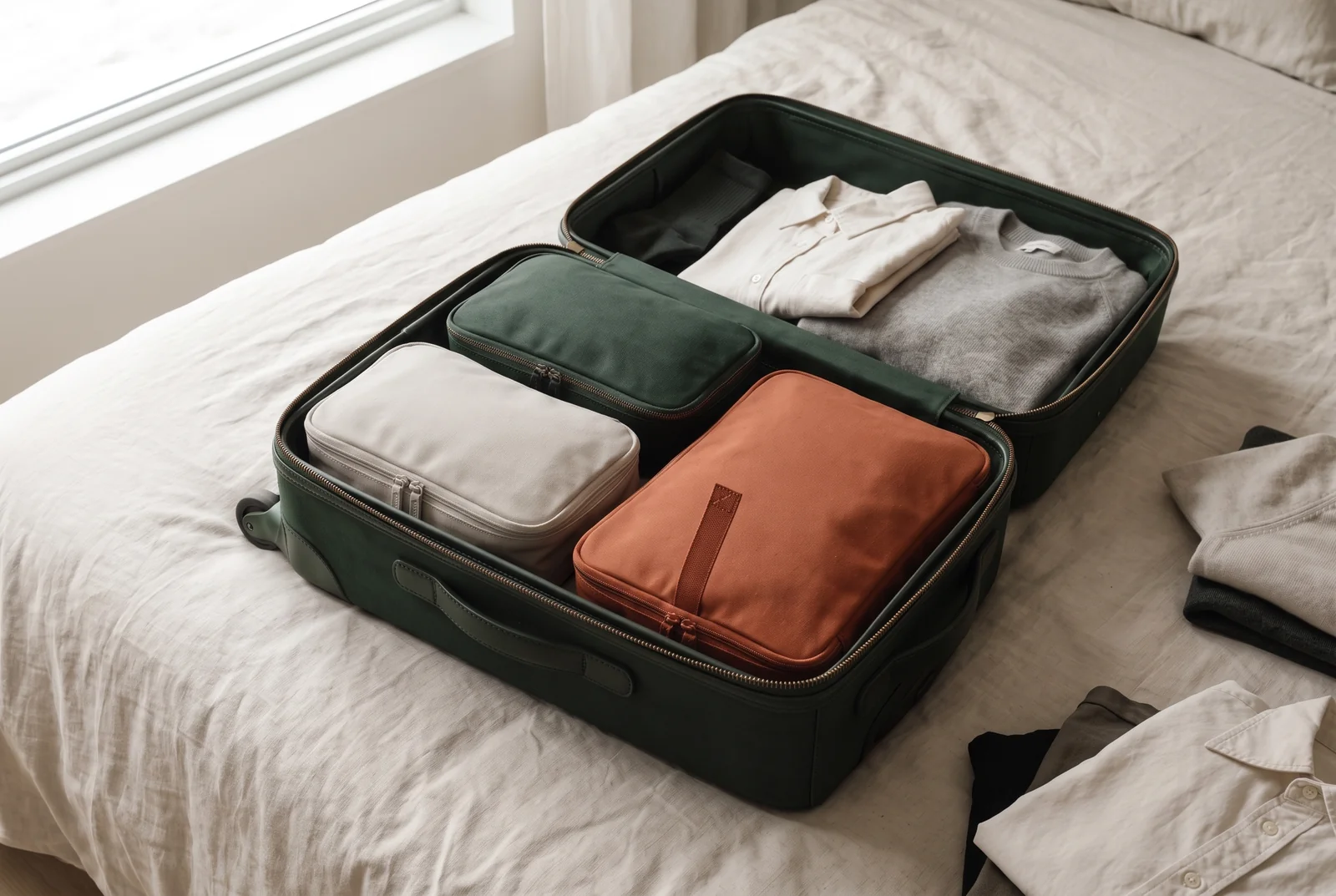
Make the comparison that matters
| Check | What it changes | Your next step |
|---|---|---|
| Laundry interval | How many clothing changes are needed | Plan the next dependable wash |
| Drying time | When washed items become usable | Include a realistic buffer |
| Activities | Different clothing or footwear may be necessary | Separate essential uses from duplicates |
| Weight allowance | Dense extras can become the constraint | Weigh the finished packing list |
Plan a cycle rather than fourteen outfits
Choose the longest interval between realistic laundry opportunities. Include drying time: a machine in the building does not mean everything is ready an hour later. The packing planner adds a buffer day to your chosen laundry cycle, then lets you change every quantity.
Build a small set of compatible outfits
Lay out tops and bottoms together. Count combinations you would genuinely wear, including the weather and activities on the itinerary. One versatile layer can serve several combinations. Special-event clothing should earn its place by being necessary, not by a vague possibility.
Budget the awkward items first
Shoes, a laptop, a camera and toiletries take space that clothing formulas tend to hide. Put them on the list early, including their actual weights. Separate clothing worn during travel from clothing inside the bag so you do not double-count. Add required medication and documents to your own checklist.
Do a packed rehearsal
Close the bag, weigh it and carry it around. Retrieve a charger without moving every item. Leave a small reserve for the return trip. If the result is too heavy, remove an optional object before buying a more complicated organization system. The objective is a list you can use repeatedly, not a tightly packed puzzle.
Before you spend
A compact list starts by removing duplicate functions. Choose clothing combinations that work together and identify the genuinely separate needs, such as a formal event or a specific outdoor activity. Keep essential personal items based on your own requirements. A minimalist packing list should not pressure someone to omit equipment they need for accessibility, health or comfort.
A useful finishing check
Use the longest realistic period without washing as the starting point, then reconsider the bag size or baggage allowance if necessary. A plan that only works with a laundry service you have not confirmed is a fragile packing plan.
ILLUSTRATIVE EXAMPLE
Put it into practice
For an illustrative fourteen-day journey with dependable laundry every four days, plan the clothing cycle around four days plus a drying buffer, not fourteen complete sets. If the middle stay has no laundry or clothes need two days to dry, increase the buffer rather than relying on the original assumption.
Your next steps
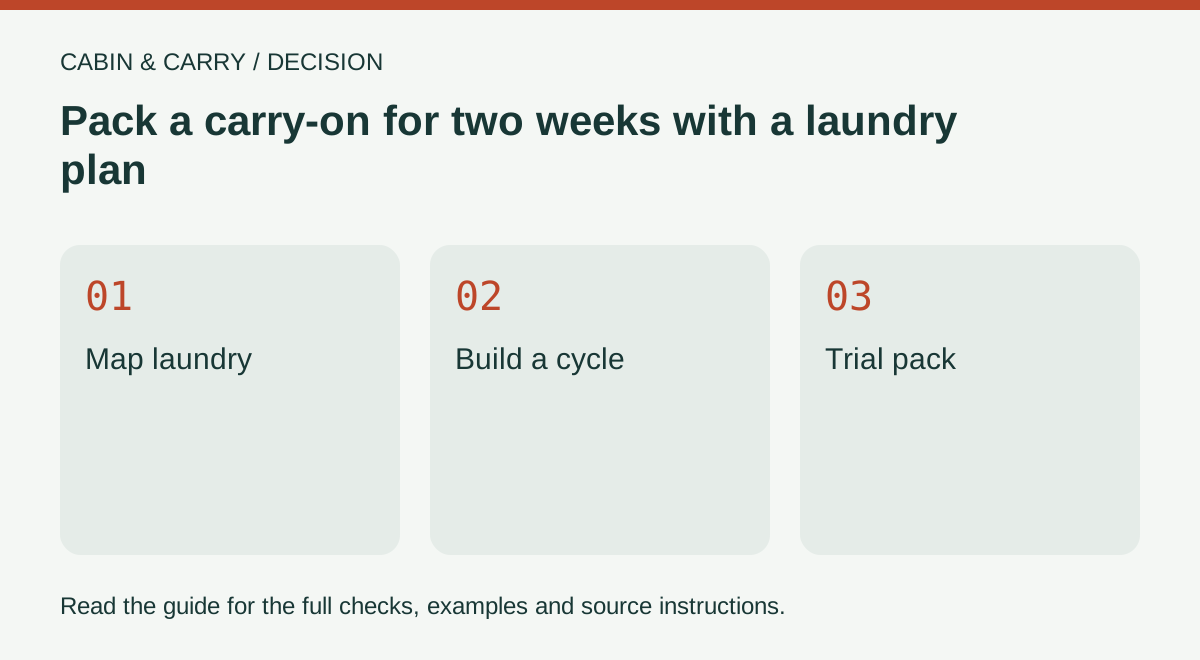
- Map laundry: use dependable opportunities
- Build a cycle: allow for drying
- Trial pack: verify access and weight
Questions that come up
Is two weeks possible in a carry-on?
For many itineraries, a laundry plan makes it practical. Climate, specialist equipment, personal needs and the actual allowance decide.
Is the 5-4-3-2-1 rule mandatory?
No. Fixed packing formulas are starting ideas. Adjust quantities to your activities and laundry access.
What if there is no dependable laundry on the trip?
Use the longest realistic period without washing as the starting point, then reconsider the bag size or baggage allowance if necessary. A plan that only works with a laundry service you have not confirmed is a fragile packing plan.
Sources and further reading
Source references for this edition, September 8, 2026. Recheck changeable rules and the exact product or vehicle instructions before acting.