
The journal
How to measure luggage wheels for replacement?
how to measure luggage dimensions wheels with practical steps and a checklist to match diameter, axle, mount and housing before buying replacements.
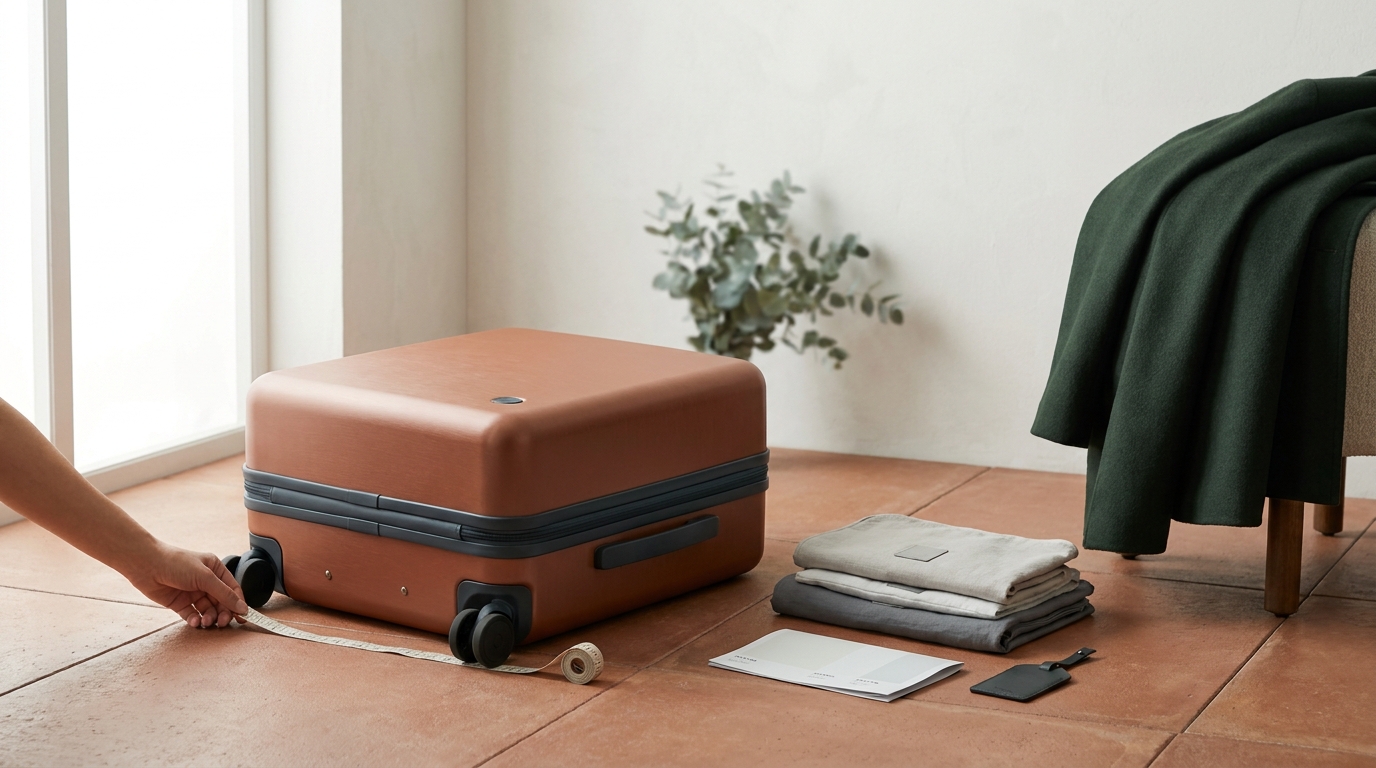
Why measuring luggage wheels correctly matters
Answer first: measure the wheel and mount so the replacement rolls, swivels and fits without rubbing or wobble. A quick, correct measurement prevents repeated returns and keeps your suitcase stable on trips.
When you replace wheels you are matching a handful of attributes that determine function: wheel diameter, wheel width or tread, axle diameter and length, bearing or hub type, and the mounting plate or housing that connects the wheel to the case. If any of these differ, the wheel may not spin freely, may scrape the case, or could change how the spinner tracks across floors. Mentioning wheel diameter and axle early helps in conversations with sellers and repair shops.
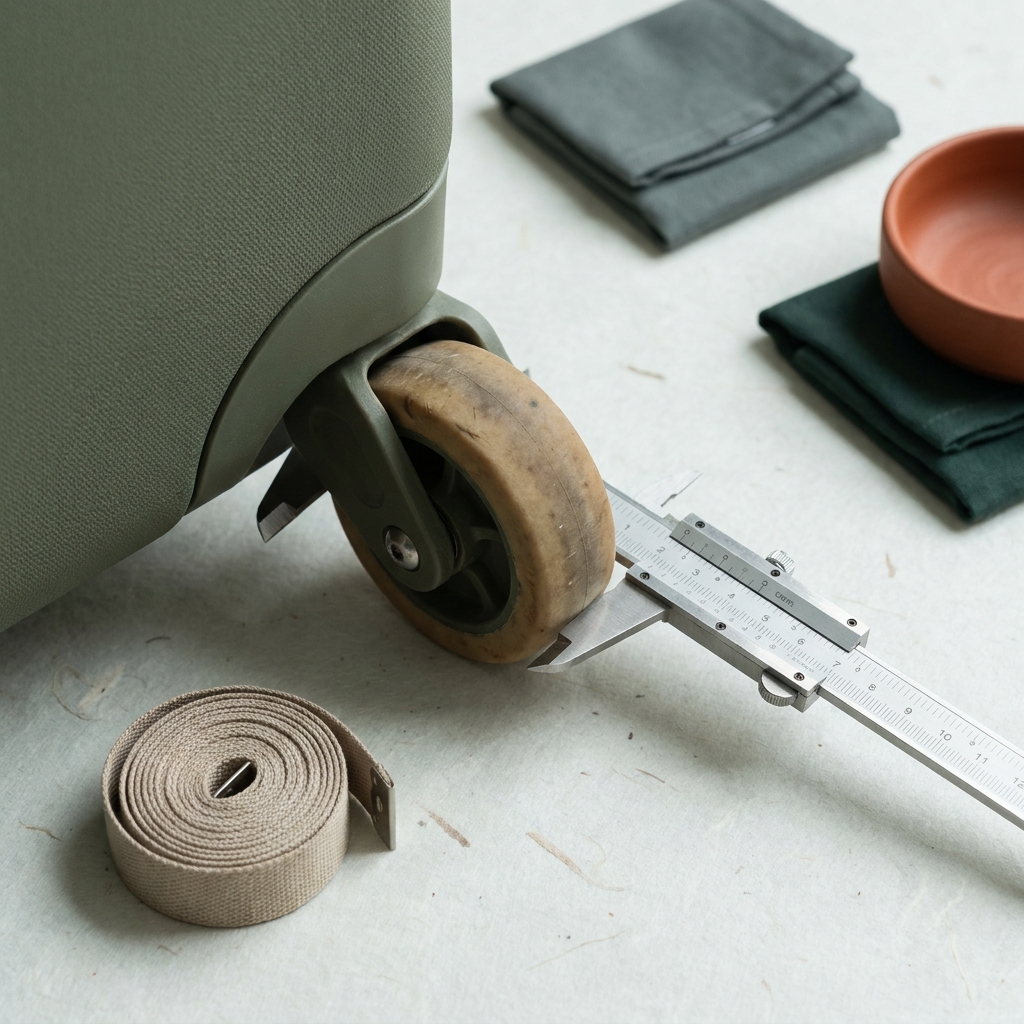
One concrete example: a common carry-on spinner with 50 mm wheels often needs a 50 mm outer diameter and a narrow axle; fitting a 65 mm wheel intended for checked luggage can reduce clearance, change handle balance, and make the case sit unevenly.
Main outcomes: after following this guide you will have a reliable spec sheet with the fields sellers ask for, clear photos to send, and a checklist to compare any replacement listing.
Tools and terms you need to measure luggage wheels
Tools, minimum set. Gather a tape measure for quick diameter checks, a digital caliper for accurate rim and axle measurements, a straight ruler for visual alignment and shorter spans, a small flashlight to see inside housings, and a smartphone camera to photograph angles and details. A small wrench or screwdriver may be needed to access the axle on some models.
How to use each tool in one line: use the tape measure around the wheel for rough outer diameter, use the caliper across the widest point for precise diameter and tread width, use the ruler for quick checks of housing clearance, use the flashlight to inspect the mounting and bearing, and use the camera to record side and under views for later reference.
Key measurement terms explained. Outer diameter is the total wheel diameter from edge to edge. Tread width is the width of the rolling surface you see on the wheel. Axle diameter is the thickness of the bolt or pin that the wheel rotates on. Axle length is the exposed or usable axle span, important when there is a spacer or mounting plate. Mounting plate or housing type refers to how the wheel attaches to the case: a bolted plate, a rivet, an axle pin, or an integrated hub. Bearing type refers to whether the wheel uses ball bearings, plain bushings, or a sealed cartridge; you will often report a visual description rather than a precise bearing number.

Photo tips. Take photos from three angles: a side view showing full wheel diameter, a close-up of the wheel where it meets the housing so the axle type is visible, and an undercarriage shot showing how the housing attaches to the shell. Use a coin or a small ruler in the photo for scale. Good photos cut confusion when you contact suppliers or compare listings.
Short toolset to measure luggage wheels accurately
Step-by-step: how to measure luggage dimensions wheels
Step 1: measure outer diameter. Lay the suitcase on its side so the wheel faces you. For a rough check use a tape measure across the exposed wheel from one outer edge to the opposite outer edge. For a precise reading use a digital caliper: place the caliper jaws on the outer rim at the widest points and read the millimeter or inch value. If the wheel has a scalloped or rounded profile measure where the tread makes contact with flat ground, or measure the maximum outer edge; record both if unsure.
Troubleshooting tip: if the wheel is recessed into a cup or housing, shift the case so the wheel settles on a flat surface and measure the visible outer diameter where the wheel contacts the surface. Note the measurement units you use, and record both millimeters and inches if you expect to shop on international sites.
Step 2: measure wheel width and tread. Use the caliper or ruler to measure the tread width, which is the part of the wheel that makes contact with surfaces. Place the caliper across the widest rolling surface, not across the decorative rim. If the wheel has a separate inner rim, note the rim width as well; some replacement wheels list inner rim diameter or hub width as separate specs.
Troubleshooting tip: if the wheel has a raised ridge or a dual-material tread, measure the usable rolling surface only. Record whether the tread is smooth, grooved, or dual-durometer; this helps with noise and grip expectations.
How can I measure my suitcase wheels so I buy the correct replacements?
Measure outer diameter, tread width, axle diameter and length, and note the mounting type and housing clearance; take photos and record units so sellers can confirm compatibility.
Step 3: measure axle diameter and axle length. First inspect how the wheel mounts: can you see a bolt, pin, rivet, or plate? If there is a visible bolt, remove it if safely possible and measure the shaft thickness with the caliper to get axle diameter. Measure to the nearest millimeter or to the nearest eighth inch for imperial listings. For axle length, measure the length of the shaft that passes through the wheel or the total exposed length between the housing walls. If the axle is riveted or not removable, measure the visible shaft and the distance between mounting points to estimate usable axle length.
Troubleshooting tip: many spinners use short threaded bolts or captive pins. If you cannot remove the axle, take a close-up photo with the camera and a small ruler for scale and supply that to a seller or repair person. Note if the axle seems hollow, threaded, or solid; each affects the replacements that will fit.
Step 4: check housing clearance and orientation. Measure the space inside the housing from the wheel edge to the shell and note whether the wheel sits flush, recessed, or protruding. Record the orientation of the mount: does the wheel swivel freely 360 degrees on a caster-style housing, or is it fixed? Measure the height from the base of the housing to the wheel center if available; some replacement wheels require the same center height to prevent rubbing under the shell.
How to record measurements clearly. Use a simple template and fill each field: outer diameter (mm and inches), tread width (mm and inches), axle type (bolt, rivet, pin), axle diameter, axle length, mounting type, housing clearance, bearing description, and three photos (side, mount close-up, undercarriage). Keep notes about units and any irregularities such as wear on the tread or damaged housing.
How to choose replacement wheels after measuring
Match the specs. When you review replacement listings, match diameter, tread width, and axle diameter first. If a listing gives both metric and imperial dimensions, confirm they convert correctly to the numbers you recorded. Next check the mounting type and whether the replacement includes adapters or spacers for different housings. If you measure axle diameter as 6 mm, do not pick a replacement that lists an 8 mm axle without an adapter.
Choosing OEM or third-party. OEM replacements are often exact matches by model number, while third-party exact matches rely on the same dimensions. Universal or adjustable-mount wheels can work for many cases but may require adapters or slight modifications and may change clearance or how the case sits. Consider the trade-off: universal wheels are flexible but may add complexity in fit and long-term durability.
Material and load considerations. Wheel material affects rolling, noise, and wear. Hard plastics roll efficiently but can be noisy and less forgiving on rough surfaces. Polyurethane blends quiet the ride and resist scuffing better, while rubber-like compounds can offer more grip but wear faster. Check the product details for load rating or a statement of intended use, especially if the wheel is for a large checked bag that will carry heavy items.
Quick checklist to compare a listing to your measurements: confirm outer diameter within a millimeter or an eighth inch if exact fit is critical; confirm axle diameter and thread type; confirm mounting plate dimensions and bolt pattern if present; check whether adapters are supplied; evaluate material and stated use. If in doubt, share your measurement template and photos with the seller before ordering.
Common mistakes and troubleshooting when measuring wheels
Top measurement errors. One frequent mistake is measuring the hub or inner rim instead of the tread, which leads to mismatched diameter. Another is confusing inner rim width with the tread width, or failing to record axle type so a threaded bolt is treated like a plain pin. Using inconsistent units or not noting whether a measurement was taken at the widest point are other common issues.
Unit errors: always note whether you measured in millimeters or inches and include both if you plan to order from different markets. A second common error is forgetting to check housing clearance and assuming a larger diameter will always fit; clearance determines if the wheel will rub the shell or handle cavity.
Recheck process. If the new wheel does not fit, remeasure the original wheel and compare each field to the replacement. Look at axle fit first; if the axle diameter or thread does not match, the wheel will not mount. If axle specs match but the wheel rubs, compare housing clearance and center height.
Simple fixes when fit is close. Small spacers or washers can adapt axle length in some bolted mounts, and short adapters can convert between a metric and an imperial shaft in a few cases. Use caution: adding spacers may change wheel alignment and affect rolling. If the mount is riveted or the housing is damaged, seek a professional repair; do not force a non-matching axle into a riveted hole.
Carry-on spinner: often has smaller diameter wheels and narrower axles; a slightly larger universal wheel may reduce clearance and make the handle socket more likely to catch. Large checked bag: wheels are larger and may have higher load ratings; a lower-rated universal wheel may wear quickly under heavy luggage. These quick checks can save time and money by preventing returns.
Practical examples, quick checklist, and closing tips
Scenario A: small carry-on spinner. Typical sample measurements you might find: outer diameter around 45 to 55 mm, tread width 12 to 18 mm, axle diameter 4 to 6 mm, and a low-profile housing. Notes: prefer a compact wheel with a similar center height and a quiet polyurethane tread for airport tile and carpet.
Scenario B: large checked suitcase. Typical sample measurements: outer diameter 65 to 85 mm, tread width 18 to 25 mm, axle diameter 6 to 8 mm, and a sturdier plate mount. Notes: select wheels with higher load tolerance, a durable tread material, and secure mountings that resist impact from baggage handling.
Scenario C: hybrid spinner for uneven surfaces. Measurements might include a larger diameter combined with a softer tread; pay attention to housing clearance and whether the wheel assembly allows for a little movement to absorb shocks. If you expect to travel over rough pavement, prioritize materials and bearing type that handle repeated impacts.
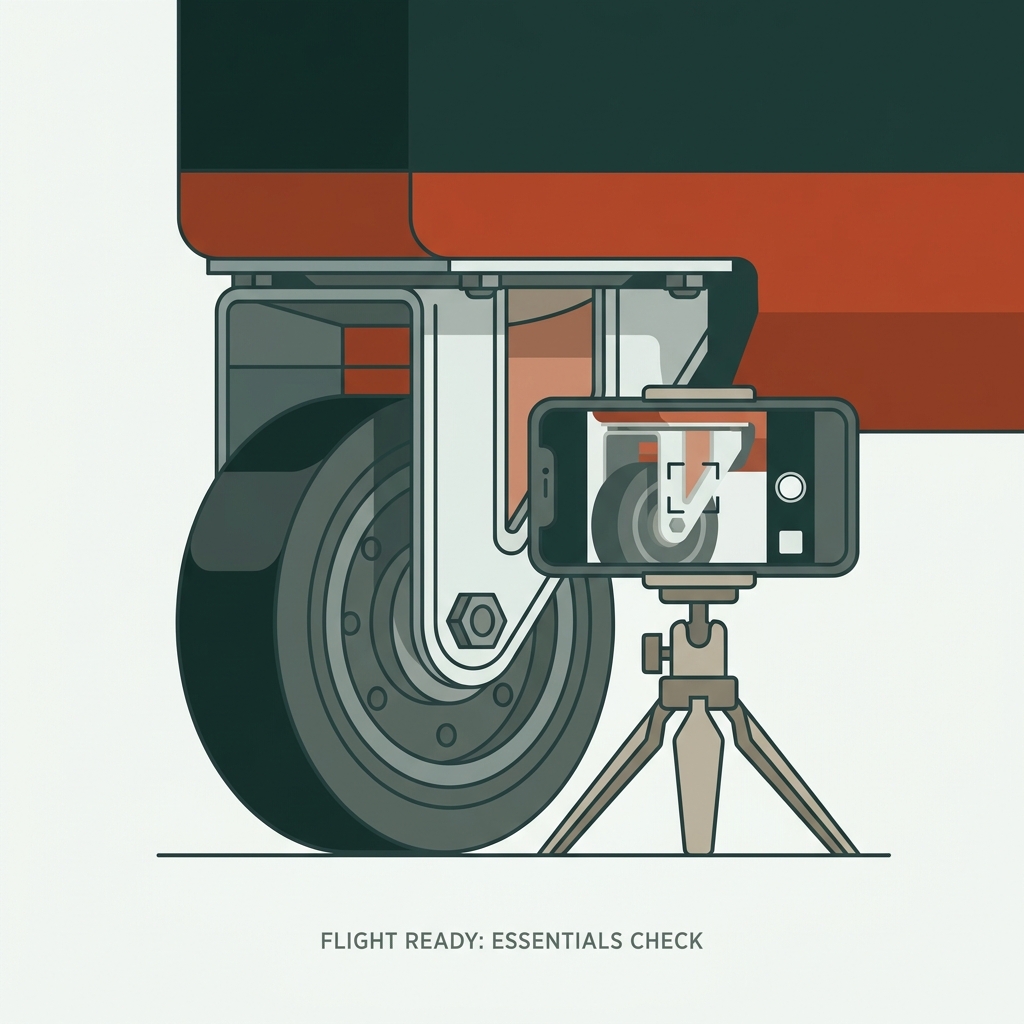
Copy-ready checklist to use before ordering replacements: outer diameter (mm/in), tread width (mm/in), axle type, axle diameter, axle length, mounting type and plate dimensions if present, housing clearance and center height, bearing style or notes, three annotated photos, and any wear or damage notes. Keep this checklist on your phone when contacting sellers.
Closing tips. Measure twice and photograph every angle; keep units consistent and include both metric and imperial values if you may shop internationally. When possible, prefer replacements that match axle and mounting type exactly. If you must choose a universal option, confirm return policies and whether adapters are included. Also consider using the bag-fit tool to check fit before you buy.
Final note: a clear measurement template and good photos speed up the process and reduce the chance of returns. With the measurements and checklist from this guide you should be able to order replacement wheels that restore your suitcase performance quickly.
Frequently asked questions
How do I measure wheel diameter accurately?
Use a digital caliper across the widest point of the wheel or place the case so the wheel rests on a flat surface and use a tape measure; record millimeters and inches.
What if I cannot remove the axle to measure it?
Take close-up photos with a small ruler for scale, note visible thread or pin type, and supply these details to the seller or repair service for verification.
When should I choose a universal wheel instead of an exact match?
Use a universal wheel when exact OEM replacements are unavailable and the housing allows adapters; expect potential adjustments and verify return policies.
Measure carefully, photograph thoroughly, and keep a short checklist on hand when you contact sellers or repair services. Small differences in axle or housing fit can lead to returns, so attention to detail pays off. If you follow the steps and templates in this guide you should be able to find replacement wheels that restore your suitcase to reliable rolling and handling.
References
- https://aotos.com/blogs/knowledge/luggage-wheels-guide?srsltid=AU7gw4WAyXTOMwN6rvqolw4Xq5tYLlzT6PYQBVXdwaG8OPnuRfX_L6SK
- https://www.suitcase-repair.com/blogs/suitcase-101/ultimate-guide-to-luggage-wheels?srsltid=AU7gw4UVAkN3GrMHl9gYtxwpEDa63cXmJX1-tXVsjbDJPSxQjvqZCezV
- https://www.ifixit.com/Guide/Samsonite+Luggage+Wheel+Replacement/140709
- https://cabinandcarry.com/luggage/how-to-measure-luggage
- https://cabinandcarry.com/luggage-care/two-wheel-vs-four-wheel-luggage
- https://cabinandcarry.com/tools/bag-fit