
The journal
Can I use a human scale to weigh my luggage? Practical home weighing methods
how to weigh luggage at home: practical steps for bathroom scales, handheld alternatives, safety tips and choosing a sensible margin before you travel.
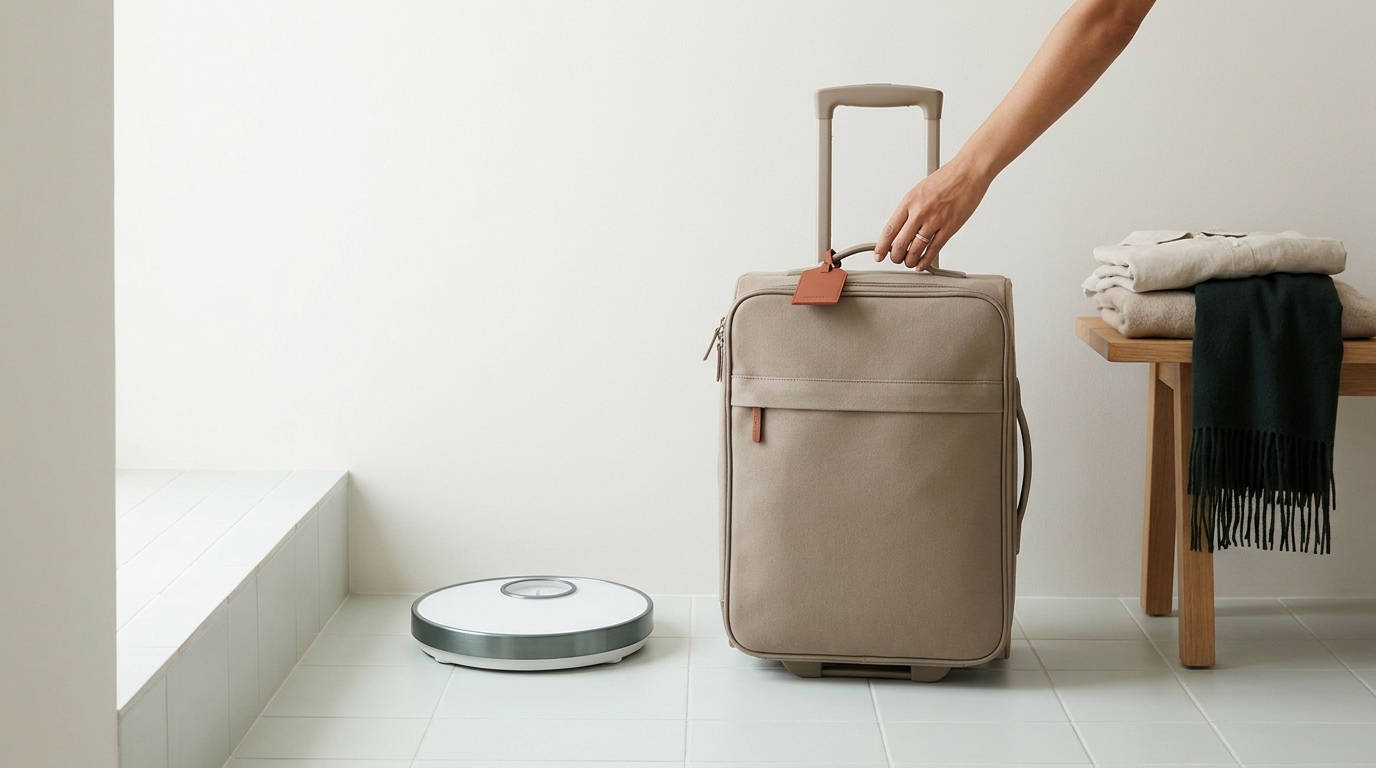
Quick answer: can you use a human scale to weigh luggage at home?
Short yes/no summary
Yes, you can use a bathroom, or human, scale to check luggage weight at home, but do so with care and a sensible safety margin because household scales have tolerances and are not intended for commercial transactions.
Can I use a human scale to weigh my luggage at home?
Yes, a bathroom scale can give a useful estimate for luggage weight when used correctly, but because household scales have tolerances you should use proper setup, allow a safety margin and consider cross-checking with a handheld scale or repeating measurements for confidence.
What this guide covers
This guide explains two practical methods you can use with a typical bathroom scale, how to reduce common measurement errors, when to choose an alternative like a handheld luggage scale, and how to pick a margin so you are unlikely to exceed airline limits at check-in. The step instructions include safety reminders for lifting heavier bags and troubleshooting tips for jumpy or inconsistent readings. Plan trips with our trip planner.
Two reliable ways to weigh luggage at home
Differential method (you, then you plus bag)
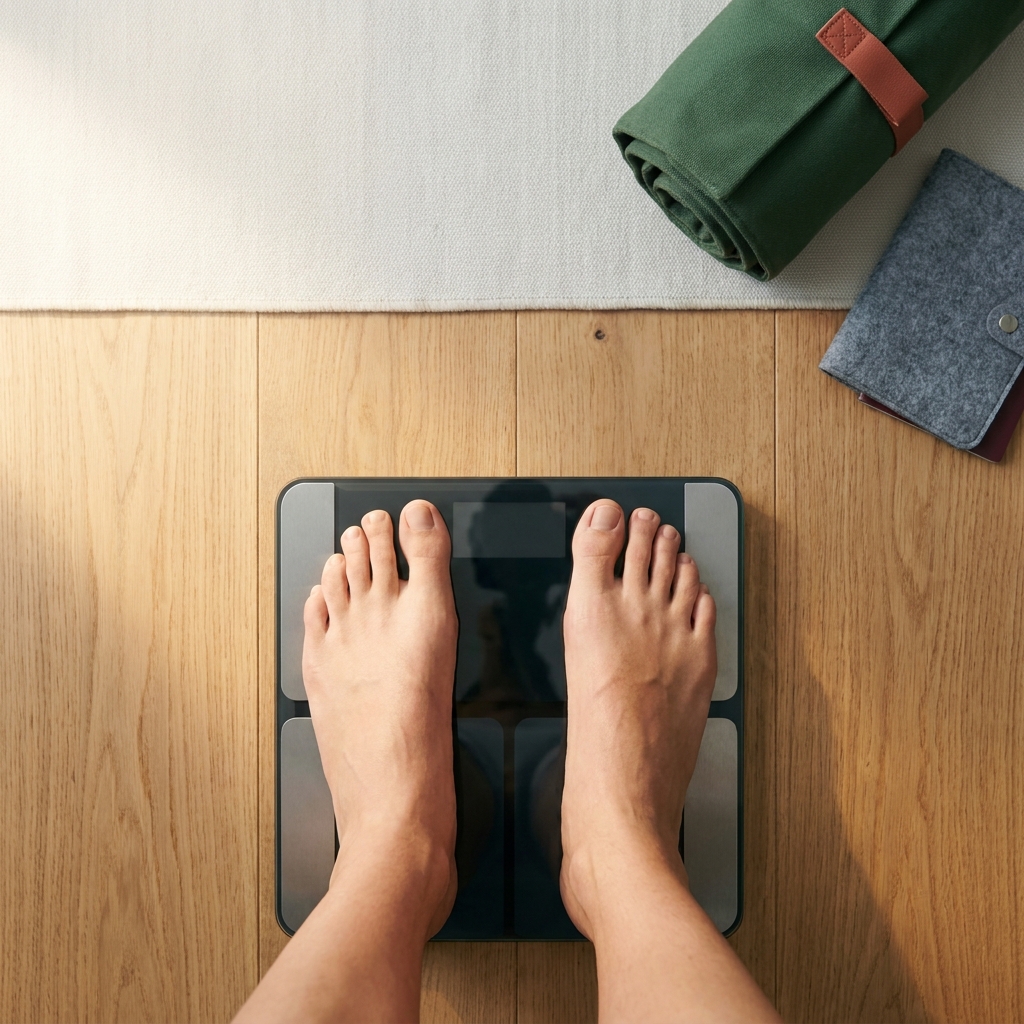
The differential method removes some balance and placement uncertainty by using your body as the reference: first weigh yourself empty, then weigh yourself while holding the packed bag and subtract the two readings to get the bag weight. This method often gives a stable result because the scale sees the same contact points under your feet for both measurements, and it avoids trying to balance a large bag on a small platform.
To do this, stand straight and still on a hard, level floor and record the number. Step off carefully, pick up the bag with both hands close to your body, step back on and hold still while the display stabilizes, then subtract the first reading from the second. If your scale has a history or memory feature, use it to avoid transcription errors; otherwise write the numbers down immediately.

Direct method (bag on scale) with setup checklist
The direct method places the bag on the scale platform and reads the display. This is simplest when the bag sits stable and the scale is large enough to support it without any part of the bag overhanging. Make sure the scale is on a hard, level floor and that the bag does not touch walls, furniture or your body while you read the value.
Checklist for the direct method: put the scale on tile or wood, zero or reset the scale if possible, ensure batteries are fresh, place the bag centered on the platform, keep the bag steady and read the stabilized number. If the bag is taller than the platform or unsteady, use the differential method instead. For practical setup tips on getting the most accurate reading from a bathroom scale, see the Consumer Reports guide.
Which method to use depends on your scale and bag. Use the direct method for small carry-on items that fit squarely on the platform. Choose the differential method for larger checked bags that are awkward to place on a small scale. Repeat measurements to confirm consistency before you finalize packing.
Common errors that skew bathroom-scale readings and how to avoid them
Surface, posture and device issues
Soft or uneven surfaces, such as carpet or rugs, can cause false readings because the scale feet do not sit flat; always use a hard, level surface for the best repeatability. Consumer testing highlights this setup issue as a frequent cause of inconsistent or low readings, so move the scale to tile, hardwood or concrete before you weigh luggage on it and use that same surface for both baseline and bag readings when using the differential method.
Motion and balance problems are another common source of error. If you sway, lift one foot, or let the bag touch your legs, a wall or a door frame, the measurement will not reflect the bag weight alone. Stand still, breathe normally and avoid shifting weight while the digital display stabilizes. If the scale shows a fluctuating number, wait until it steadies or take multiple readings and use the median value rather than a single outlier reading.
Environmental and device maintenance checks
Device problems like low batteries, a nonzero baseline or a scale that needs recalibration will change readings. Replace batteries if the display dims or wavers, and press the zero or tare function before each measurement if your model supports it. Household scales are not calibration-grade instruments, so if you suspect systematic offset try weighing a known object, such as a sealed 5 kg weight or a reliable household item, to see how far the scale reads from an expected value.
Alternatives and safety: handheld scales, hanging methods and lifting tips
When to use a handheld luggage scale
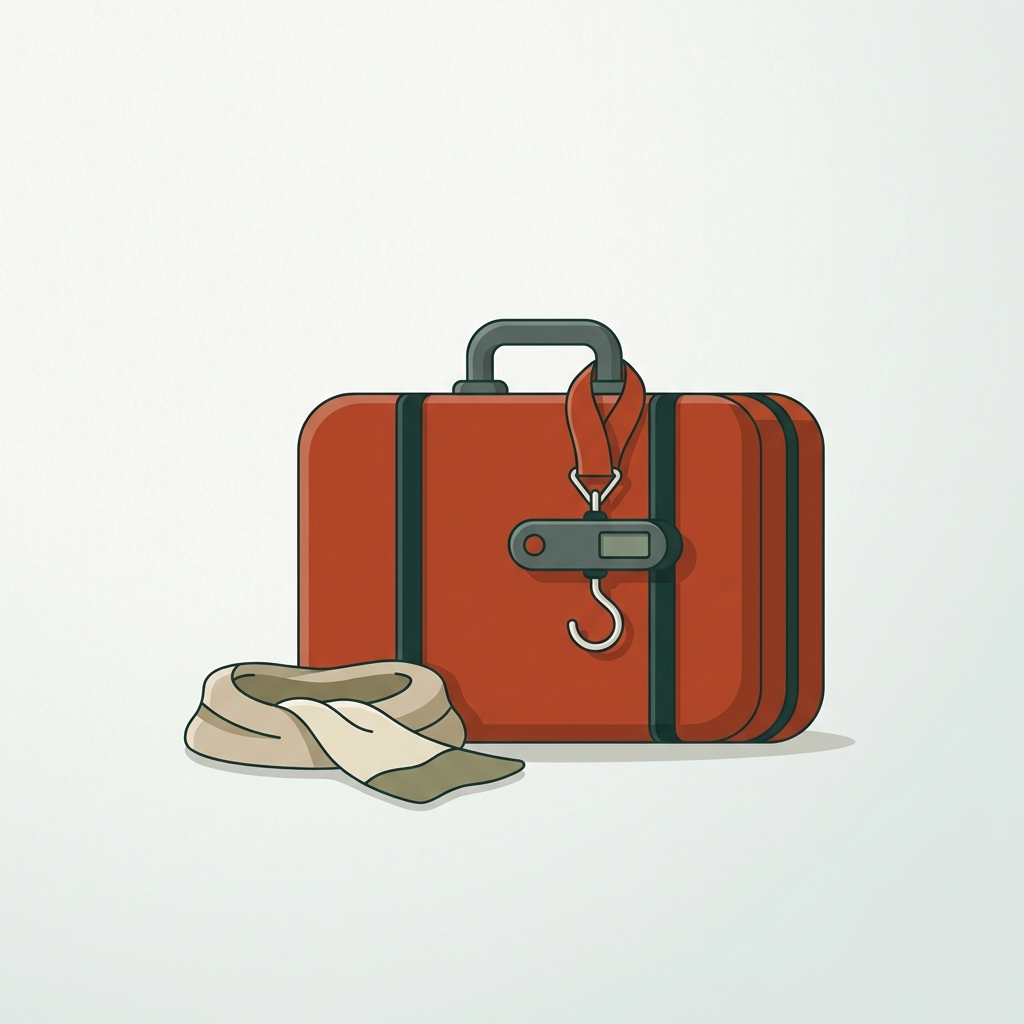
Handheld luggage scales measure suspended weight directly and are useful for travelers who want a compact, repeatable reading without balancing a bag on a floor scale. They work by suspending the bag from a strap or hook so the scale reads the load in tension rather than compression, which removes many balance and placement variables. For guidance on this alternative and how it compares to household scales, see U.S. Department of Transportation baggage tips U.S. DOT baggage tips and luggage scale reviews CN Traveler.
Before you use a handheld scale, confirm its rated capacity exceeds the expected bag weight and inspect the strap or hook for wear. A device that is close to its maximum capacity may be less accurate, and a fraying strap is a safety risk when lifting a heavy bag. Handheld scales are portable and often precise enough for routine travel checks, especially if you test them with a known load to confirm consistent readings. For equipment reviews, see Reviewed's guide Reviewed.
Quick check for handheld luggage scale suitability
Safe ways to lift or suspend luggage for weighing
If you must lift or suspend a heavy bag to weigh it, follow established safe lifting recommendations: bend your knees, keep your back straight, keep the load close to your body and avoid twisting while lifting. Asking someone to help or using a hoist or luggage trolley for positioning reduces injury risk. The NHS and occupational safety guidance offer practical steps to reduce strain when handling heavy items.
When suspending luggage from a fixed point such as a rail or a sturdy hook, avoid any contact between the bag and nearby surfaces. Let the bag hang freely and read the handheld scale only when the display stabilizes. If you use a chair or other household item as a makeshift suspension point, be careful that the setup does not create a side load on the strap, and never exceed the rated capacity of the device or the structural limit of the support.
How much margin should you allow and what airlines expect
Choosing a safety margin based on device limits
Because household scales have tolerances and can show small offsets, allow a safety margin below the airline limit to reduce the chance of a surprise fee at the airport. The metrology guidance that describes tolerances for noncommercial scales underscores that a practical margin is sensible rather than treating a home scale reading as exact NIST Handbook 44.
The exact margin you choose depends on how confident you are in your setup and the scale quality. For frequent travelers who need higher confidence, using a handheld luggage scale to cross-check a bathroom-scale reading can help. In all cases, avoid packing to the absolute limit shown by a single home measurement; leave some room for measurement variability and the airline to count wheels, handles and any external pockets in the total weight.
Confirming airline rules and consequences
Airlines check baggage weight at check-in and sometimes again at the gate, and items that exceed allowed weight may incur extra charges or require repacking. Because procedures vary by airline and route, check your carrier's baggage rules early and include wheels and handles in your measured weight so your home measurement matches what agents will see at the counter. For official guidance on baggage allowances and traveler tips, review the carrier or regulator resources such as the U.S. DOT baggage tips U.S. DOT baggage tips.
If you discover overweight at the airport, common options are to move items to carry-on, redistribute weight across other checked bags if available, or pay the overweight fee. Planning ahead with a margin and a simple repacking plan reduces stress and the chance you will pay extra at the last minute.
Practical scenarios, quick checklist and final takeaways
Three short scenarios
Light carry-on, easy check: For a small personal item or carry-on that fits comfortably on your bathroom scale, use the direct method on a hard floor and allow a small margin so you are not right at the airline limit. Reweigh after finalizing what you will actually carry to the gate. See Wirecutter's scale recommendations Wirecutter review.
Full checked bag: For a heavy checked bag that is awkward on a small platform, use the differential method to reduce placement error, and cross-check with a handheld scale if you have one. If your home readings approach the scale's maximum, redistribute weight or consider removing nonessentials rather than relying on a single top-end reading.
Last-minute reweigh: If you must repack at the airport, use simple checks and remember safe lifting technique when moving heavy items. Asking a travel companion to hold or support the bag while you reposition it reduces strain and speeds the process.
Printable checklist
Prepare the bag: zip and secure external pockets, include wheels and handles in the measurement. Check the scale: fresh batteries, zeroed, on hard level floor. Choose method: direct if bag fits, differential if it does not. Repeat and compare: take two or three readings and use the consistent value. Allow margin: leave some weight buffer below the airline limit. Pack plan B: have a redistribution or carry-on strategy if overweight at check-in.
Frequently asked questions
Can a bathroom scale be trusted for airline limits?
A bathroom scale gives a useful estimate but has tolerances; allow a margin and cross-check with a handheld scale or repeat measurements for confidence.
Is the differential method more accurate than putting the bag on the scale?
The differential method can reduce placement and balance errors for large or unstable bags, making results more repeatable on small platforms.
How big a margin should I leave under the airline limit?
Choose a modest margin based on scale quality and setup; if unsure, leave a larger buffer and verify with a handheld scale before travel.
Used carefully, a household scale is a useful preflight tool but not a commercial measurement standard. Cross-checking, leaving a sensible margin and following safe lifting guidance will reduce surprises and keep you and your luggage ready to go. If you travel often, consider a compact handheld scale as a second check or plan a routine weighing step into your packing process so measurements become quick and reliable.
References
- https://nvlpubs.nist.gov/nistpubs/hb/2024/NIST.HB.44-2024.pdf
- https://www.transportation.gov/airconsumer/baggage
- https://www.cdc.gov/niosh/topics/ergonomics/default.html
- https://www.cntraveler.com/story/the-best-luggage-scales
- https://www.reviewed.com/home-outdoors/best-right-now/the-best-luggage-scales
- https://www.nytimes.com/wirecutter/reviews/travel-inspira-luggage-scale-review/
- https://cabinandcarry.com/tools/trip-planner
- https://cabinandcarry.com/baggage-rules
Product options for this topic
As an Amazon Associate I earn from qualifying purchases. These are researched options, not hands-on test results. Check the exact size or model, current price and availability on Amazon.
| Product option | Fit and limits to check | Retailer |
|---|---|---|
| Etekcity digital luggage scale | A handheld check before leaving for the airport. Leave a margin below the airline limit because scales and baggage rules can differ. | View on Amazon |