
The journal
Does a 22 inch suitcase include the wheels in size for carry-on? A practical guide
how to measure luggage dimensions wheels: Learn whether wheels and handles count for a 22 inch carry-on and how to measure at home before you travel.
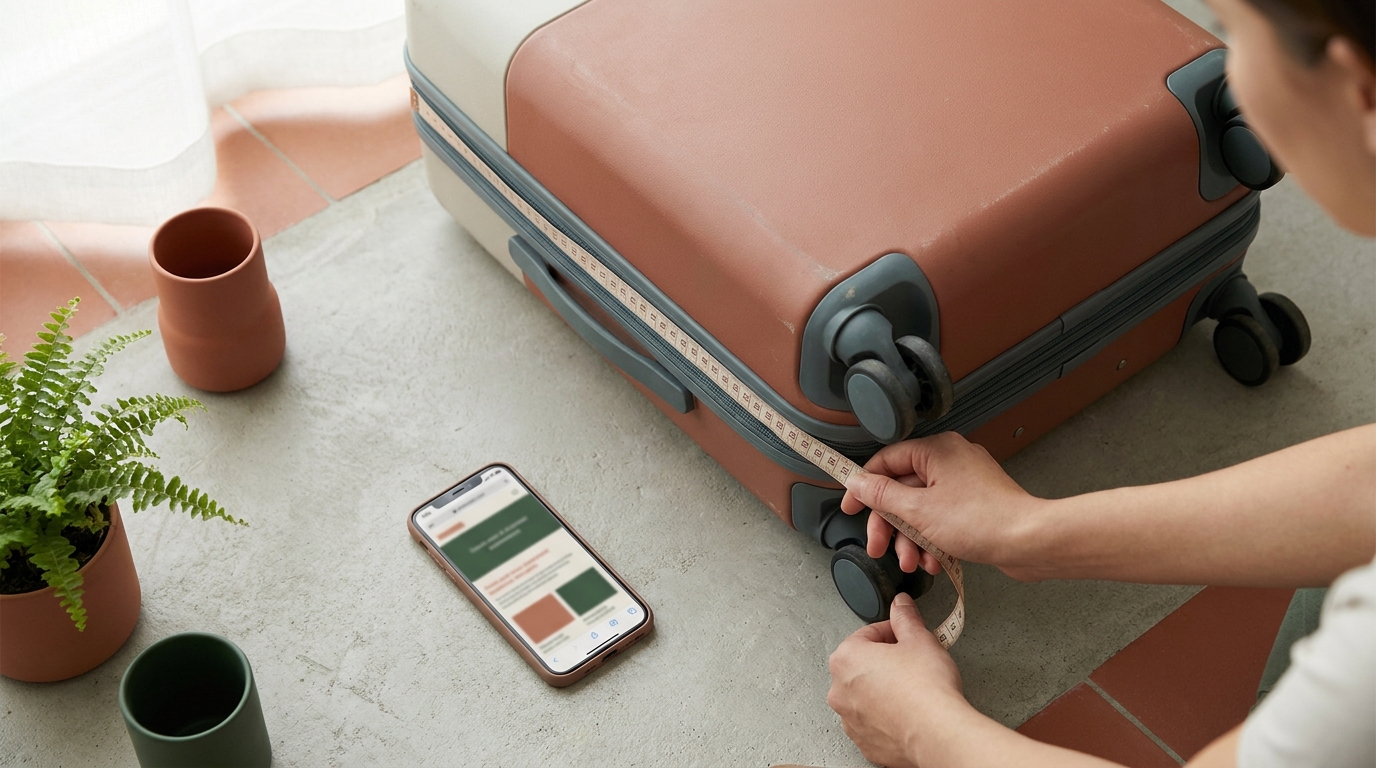
Do wheels and handles count toward a 22 inch carry-on? Quick answer and context
Short answer for U.S. domestic flights, how to measure luggage dimensions wheels
Yes. For most U.S. domestic flights, a stated carry-on limit such as a 22 inch bag normally includes all external parts of the bag, including wheels and handles, not just the packing shell. United Airlines carry-on baggage
That means a suitcase marketed as "22 inches" can exceed an airline's allowed dimensions once wheels or an extended handle add depth or height. Many carriers publish a maximum like 22 x 14 x 9 inches while others use a slightly larger allowance; always check the specific airline for the controlling rule.
Does a 22 inch suitcase include the wheels and handles in the carry-on size?
Yes; major U.S. airlines measure carry-on dimensions including wheels and handles, so measure the full external size with the handle collapsed to confirm compliance.
Why the definition matters when you board
If your bag measures more than the posted limit when measured complete with wheels and handles, it may be required to go to checked baggage at the gate, which can lead to delays and possible fees. The Transportation Security Administration advises passengers to verify size with their airline, because TSA does not set a universal carry-on size standard for airlines.
Knowing how to measure at home and allowing a small margin helps avoid surprises at the gate. This article shows what to measure, how to measure it correctly and how major U.S. carriers apply their rules.

How to measure luggage dimensions at home, including wheels and handles
What tools you need
Simple tools make accurate measuring quick: a tape measure or rigid ruler, a flat floor area, and a phone or camera to take a photo of measurements for reference. A soft marker or masking tape helps mark edges if you need repeat checks.
A quick at-home check to confirm bag dimensions include wheels and handles
Use a flat, level surface to set the bag upright so wheels rest naturally; a hard floor avoids compressed measurements. Photograph each measured face so you can compare later against airline limits if needed.
Step-by-step measuring process
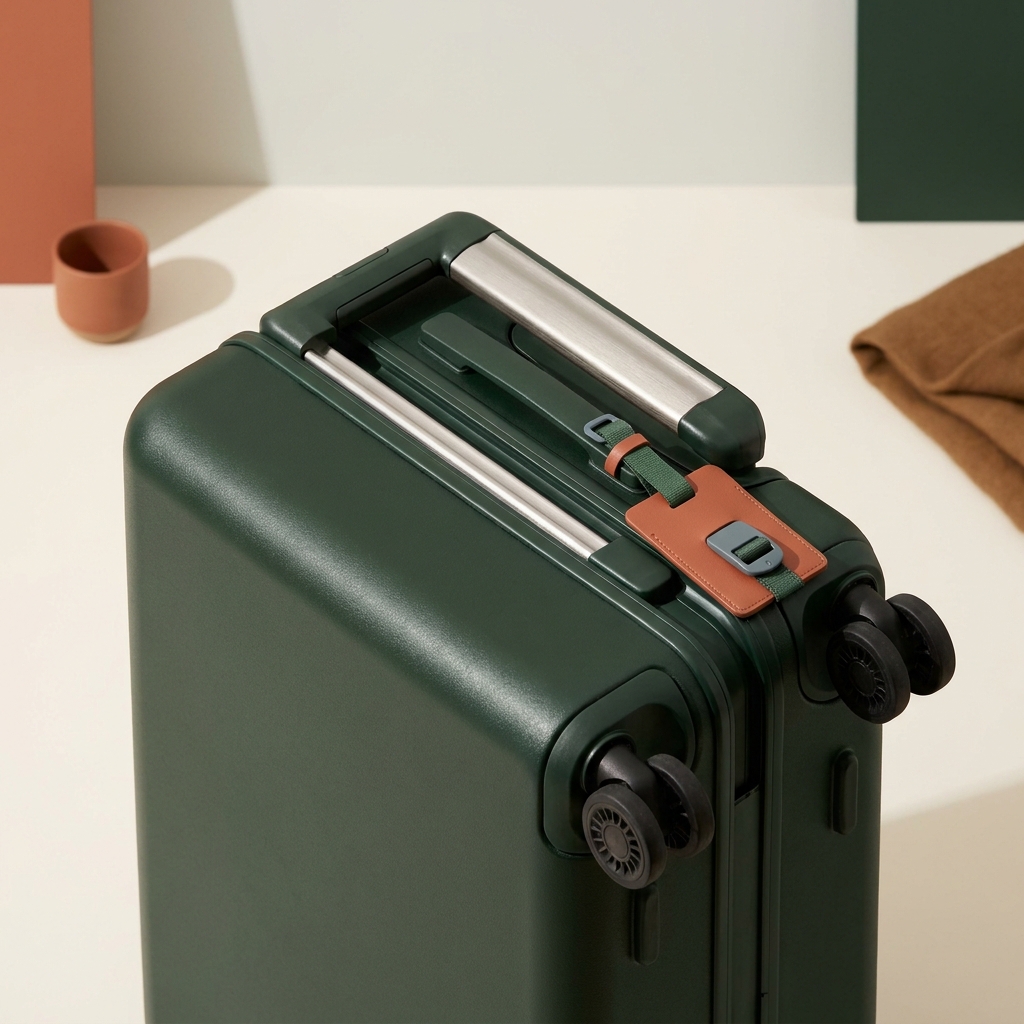
First, collapse the telescoping handle fully so it does not add to the vertical measurement. Place the suitcase on the floor in its normal upright orientation so the wheels touch the ground; this gives the measurement the airline expects. When explaining this approach to travelers, airlines point out that external parts must be included in the measurement.
Measure the three axes at their widest points. For length (height on an upright bag) measure from the topmost external point including any frame or hard top to the bottom of the wheel or wheel housing. For width measure across the bag at its widest external points, and for depth measure from the frontmost external point to the backmost external point, including spinner wheels or protruding bumpers. Include side handles, corner guards and external pockets in the width or depth as appropriate. Airlines publish guidance that measurements include wheels and handles, so these steps align with their expectations.
Record each measurement in inches. If an airline lists a linear-inch alternative, add the three dimensions to get linear inches and compare that total to the posted linear limit. Some carriers present that alternative as a single controlling value you can use instead of separate length, width and depth limits.
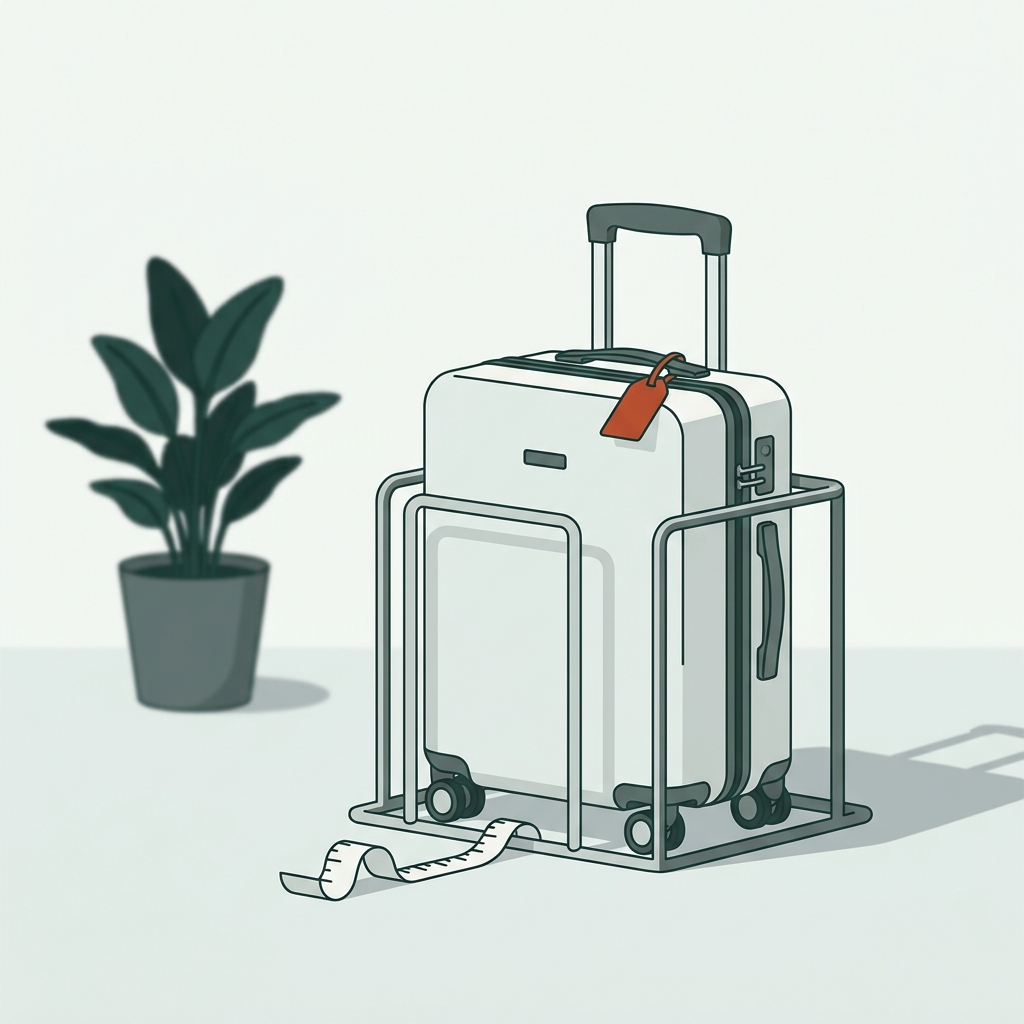
Write down length, width and depth on a single note or photo and compute linear inches by adding the three values. Keep that record with your booking details so you can check quickly before you leave home. When comparing, match the airline's units and format: many U.S. carriers publish dimensions in inches and accept the full bag including wheels as measured at home.
If your measurements are close to the airline limit, allow a small margin so that a difference in how you positioned the bag at the gate does not push it over the limit. If the airline provides a linear-inch option, use that number consistently when deciding whether the bag is within limits.
How airlines apply carry-on size rules and decision criteria
Standard size limits used by major U.S. carriers
Several major U.S. airlines list a common carry-on maximum around 22 x 14 x 9 inches, and some carriers have a different published maximum; these stated dimensions are measured including wheels and handles. American Airlines carry-on bags
For example, while several carriers use the 22 x 14 x 9 inch benchmark, Southwest publishes a larger allowance for carry-on dimensions; check the airline's own page for the exact numbers that will be enforced on your flight.
Linear-dimension alternatives and sizer/overhead fit rules
Some airlines offer a linear-inch alternative where you add length, width and depth and compare the total to a linear-inch limit; airlines that use this method also count wheels and handles in that total. One carrier lists a linear limit as an example alternative for determining compliance.
Airlines state that the final operational test is whether the bag fits the airline sizer or in the overhead bin. If a bag will not fit, gate staff may require the bag to be checked. That operational check is a frequent reason travelers who measured differently at home still find their bag gate-checked. Use the bag-fit tool to estimate overhead fit for common cabin sizes.
When an over-limit bag will be checked
If a bag is found to exceed the airline's posted limit or will not fit in the sizer or overhead bin, an airline may gate-check it and, depending on the carrier's practice, charge applicable checked-baggage fees. Because carriers publish their own policies and operational procedures, verifying the specific airline's rules for your itinerary is the controlling step.
Common mistakes travelers make when measuring carry-on size
Forgetting to include wheels, handles or exterior pockets
A common error is measuring only the hard shell or fabric body and ignoring wheels, housings, corner guards or external pockets. Those external parts count toward size limits on major U.S. carriers, so they can turn a nominally compliant bag into an over-limit item when checked at the gate.
Another mistake is measuring with the handle extended or measuring the bag while it is lying flat in a compressed position, which can understate the true upright, ready-to-board size. Always measure the bag in its normal upright position with the telescoping handle collapsed.
Measuring incorrect axes or compressed measurements
Measuring the internal packing space rather than the external dimensions can give a false sense of compliance. Similarly, pressing down on the bag to make it look smaller or removing removable parts that will be attached for travel can cause mismatches at the gate. Aim to measure the bag exactly how it will travel.
Also, do not assume a brand-stated "22 inch" model is a guaranteed fit for every airline's 22 x 14 x 9 limit; brand naming often refers to internal packing height or a rounded exterior size before wheels are added.
Assuming weight limits instead of size limits
Some travelers conflate size and weight rules. Airlines separate size compliance and weight allowances. A bag that meets dimensional limits can still exceed a carrier's weight limit for carry-on or under-seat items, so check both dimensions and any weight guidance the airline provides.
Practical scenarios and examples: 22-inch spinners, tight fits and international differences
Measuring a typical 22-inch spinner step by step
Take a typical spinner suitcase marketed as 22 inches and set it upright on a hard floor. Collapse the telescoping handle and measure from the top of the bag to the bottom of the wheel housing for length, then across the widest external points for width and the deepest external points for depth. Include any bumpers, wheel housings and external pockets in those readings. This approach aligns with the way major carriers instruct passengers to measure.
Compare the three numbers to the airline's stated dimensions. If the airline provides a 22 x 14 x 9 inch limit, check each axis against that limit; if the airline uses linear inches, add the three measurements and compare to the linear total the carrier allows. When in doubt, the overhead-bin fit is the operational test at the gate.
If your bag is a borderline fit, what to do
If your dimensions are close to the carrier's published limit, remeasure carefully and remove anything that protrudes or can be stowed inside. Consider using a soft-sided bag that can compress slightly or choosing to check the bag before boarding if the itinerary includes connections with carriers that have tighter limits.
When a bag is borderline and you must fly, proactively checking the bag at the ticket counter or at curbside can reduce gate-time stress, though checked-baggage fees may apply depending on the carrier and fare class. Confirm the carrier's policy for checked-baggage fees on its website before you choose that option.
International carriers and different size or weight rules
International and regional carriers may publish different size and weight allowances or enforce them differently than U.S. domestic carriers. For trips that include international segments, verify the rules for each carrier on the itinerary because the most restrictive applicable policy can control whether a bag travels as carry-on for the full trip.
Because policies vary by carrier and route, plan measurements and packing with the strictest carrier's requirements in mind when you have multi-carrier or international connections.
Quick checklist and next steps before you travel
One-page pre-trip checklist
Measure your bag upright with the handle collapsed and include wheels, handles and any external pockets. Compare those measurements to the airline's posted dimensions or linear-inch alternative and allow a small margin for error.
Check each carrier on multi-carrier itineraries and confirm whether the bag must fit a sizer or the overhead bin. If your bag is near the limit, consider packing heavier items into checked luggage or choosing a smaller bag to avoid gate-checking surprises.
When to check the airline policy and what to confirm at the gate
Confirm size and any weight guidance on the airline's official baggage page before you leave for the airport, and measure again the day you travel. At the gate, be prepared to demonstrate measurements if staff ask; a photo of your measured dimensions can help. If the bag does not fit or exceeds the posted limit, gate staff may require checking the item according to the carrier's procedures.
Allow extra time at the airport if you expect any ambiguity about your bag's size so you can resolve the matter calmly with airline staff before boarding.
Frequently asked questions
Do wheels and handles count toward every airline's carry-on size?
Most major U.S. airlines count wheels and handles when measuring carry-on size, but policies vary by carrier, so always check the specific airline for your flight.
How do I measure a suitcase to include the wheels?
Collapse the telescoping handle, set the bag upright on a flat surface, and measure the widest external points for length, width and depth, including wheels and any protrusions.
What if my bag is just over the published dimensions?
If a bag is over the published size or will not fit an airline sizer, gate staff may require it to be checked; consider remeasuring, removing protrusions, or checking the bag proactively.
Measuring your bag carefully and checking each carrier's baggage page before travel is the simplest way to avoid last-minute gate checks. Allow a small margin when you measure, keep a photo record of your measurements and confirm policies for every airline on your itinerary.