
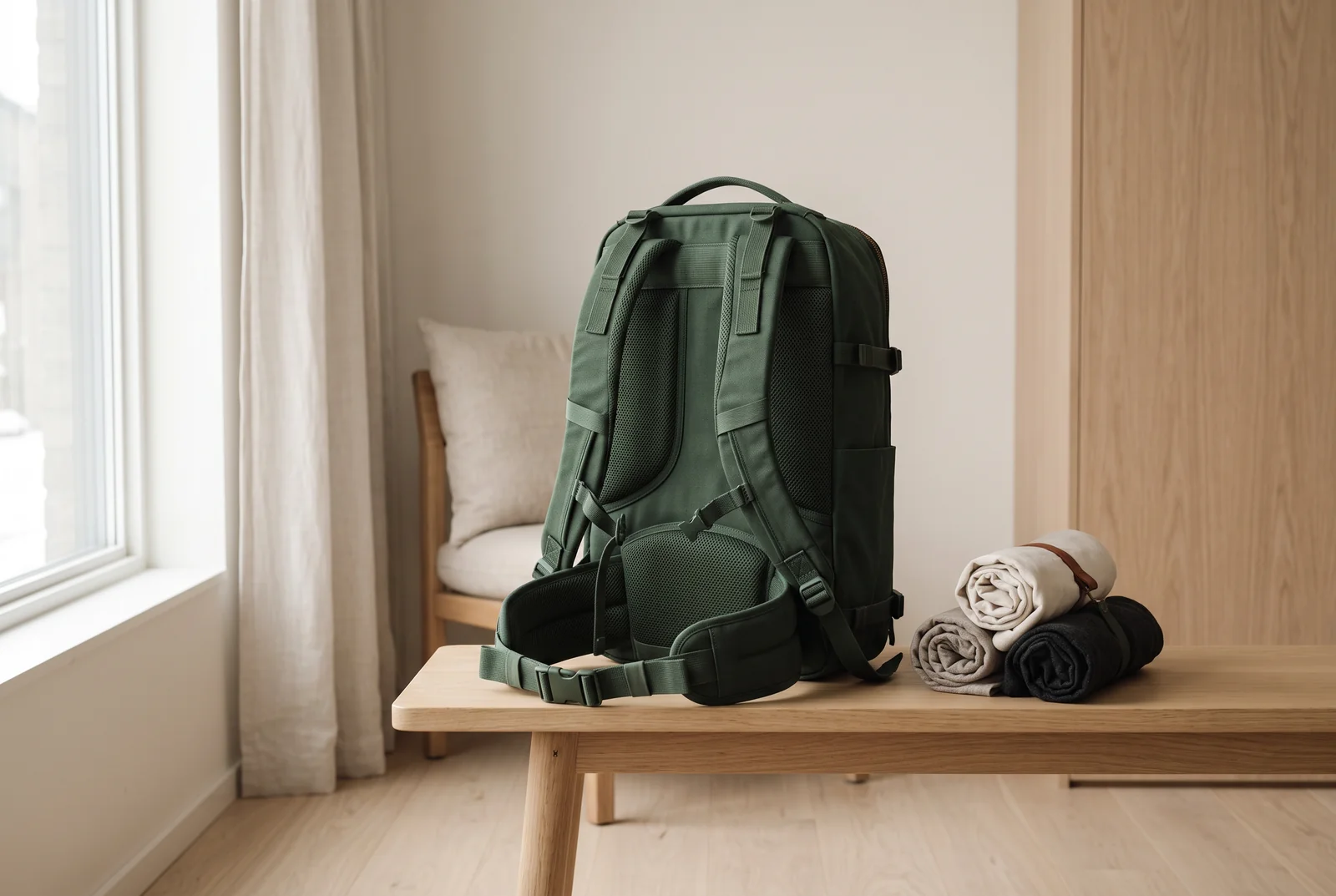
Fit the harness to your body before filling every compartment. Follow the exact pack’s adjustment instructions, then test a realistic load. A comfortable fit and a bag that closes properly matter more than reaching its advertised capacity.
Make the comparison that matters
| Check | What it changes | Your next step |
|---|---|---|
| Torso adjustment | Where the pack sits | Use the model’s fitting guide |
| Hip belt | Whether the design transfers load usefully | Check the fit when loaded |
| Heavy items | How the load feels against your back | Keep the layout stable |
| Outer attachments | Change the packed exterior | Include them in baggage checks |
A travel pack is worn, not just stored
An adjustable harness is useful only if you can set it for your body. Read the specific fitting instructions rather than borrowing measurements from a different model generation. A pack with the same advertised capacity may have a different frame, back length or hipbelt.
Test the load you intend to bring
Use the packing planner to estimate the weight, then weigh real items. Put dense items in a stable position and secure them so they cannot shift. Try the grab handles as well as the harness: trains, overhead storage and luggage racks all involve short lifts.
Check access without unpacking
Practice removing a laptop or an in-flight pouch while the main compartment stays closed. Decide whether a clamshell opening or top opening suits your accommodation. If harness covers are provided, learn how to use them before a trip so straps can be managed during storage or transport.
Keep size checks independent
A comfortable fit does not prove the bag meets the allowance. Fill any expansion section or front pocket you plan to use, then measure the whole exterior. If the bag is within a size limit only when almost empty, it is not a dependable fit for the packing list you just tested.
Before you spend
The right harness size and the right bag volume are different decisions. Try the model generation you intend to buy, because features and fits can change. If the pack has a stowable harness, verify how to cover it and what happens to the loose straps. Those details matter when handling the bag through transport and storage, even if you normally wear it.
A useful finishing check
Not automatically. A larger bag can encourage a heavier load and may have an awkward fit for your body or kit. Choose usable space and a carrying system around the items you actually need, then verify the packed exterior and weight against your flight rules.
ILLUSTRATIVE EXAMPLE
Put it into practice
A laptop, shoes and toiletries can make a small bag feel less balanced than a larger load of light clothing. Rearrange the dense items close to the back where the design permits, secure movement inside the bag and compare the feel. This is a fitting exercise, not a universal packing diagram.
Your next steps
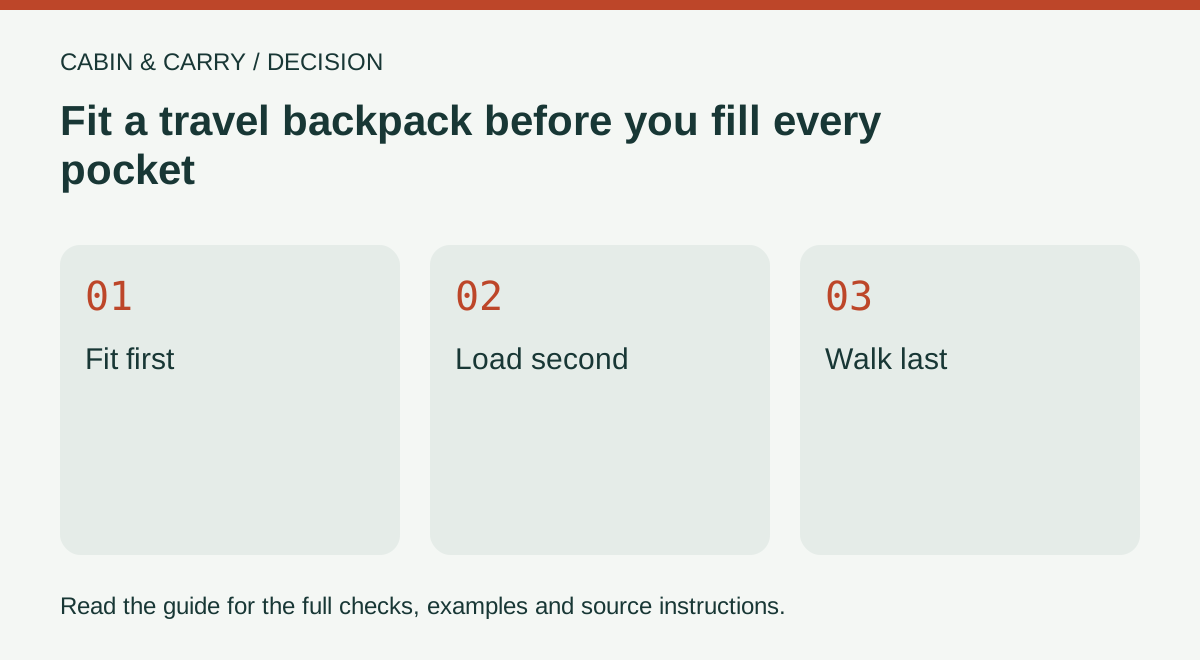
- Fit first: follow the harness instructions
- Load second: use realistic equipment
- Walk last: adjust and reassess
Questions that come up
Should I buy by body height?
Use the manufacturer’s fit guidance and a loaded try-on. People of the same height can need different harness settings.
Should I pack heavy items far from my back?
Arrange the load so it remains stable and comfortable under the pack maker’s fitting guidance; avoid a heavy pocket pulling the pack away from you.
Should I buy the largest travel backpack that fits the allowance?
Not automatically. A larger bag can encourage a heavier load and may have an awkward fit for your body or kit. Choose usable space and a carrying system around the items you actually need, then verify the packed exterior and weight against your flight rules.
Sources and further reading
Source references for this edition, September 8, 2026. Recheck changeable rules and the exact product or vehicle instructions before acting.