
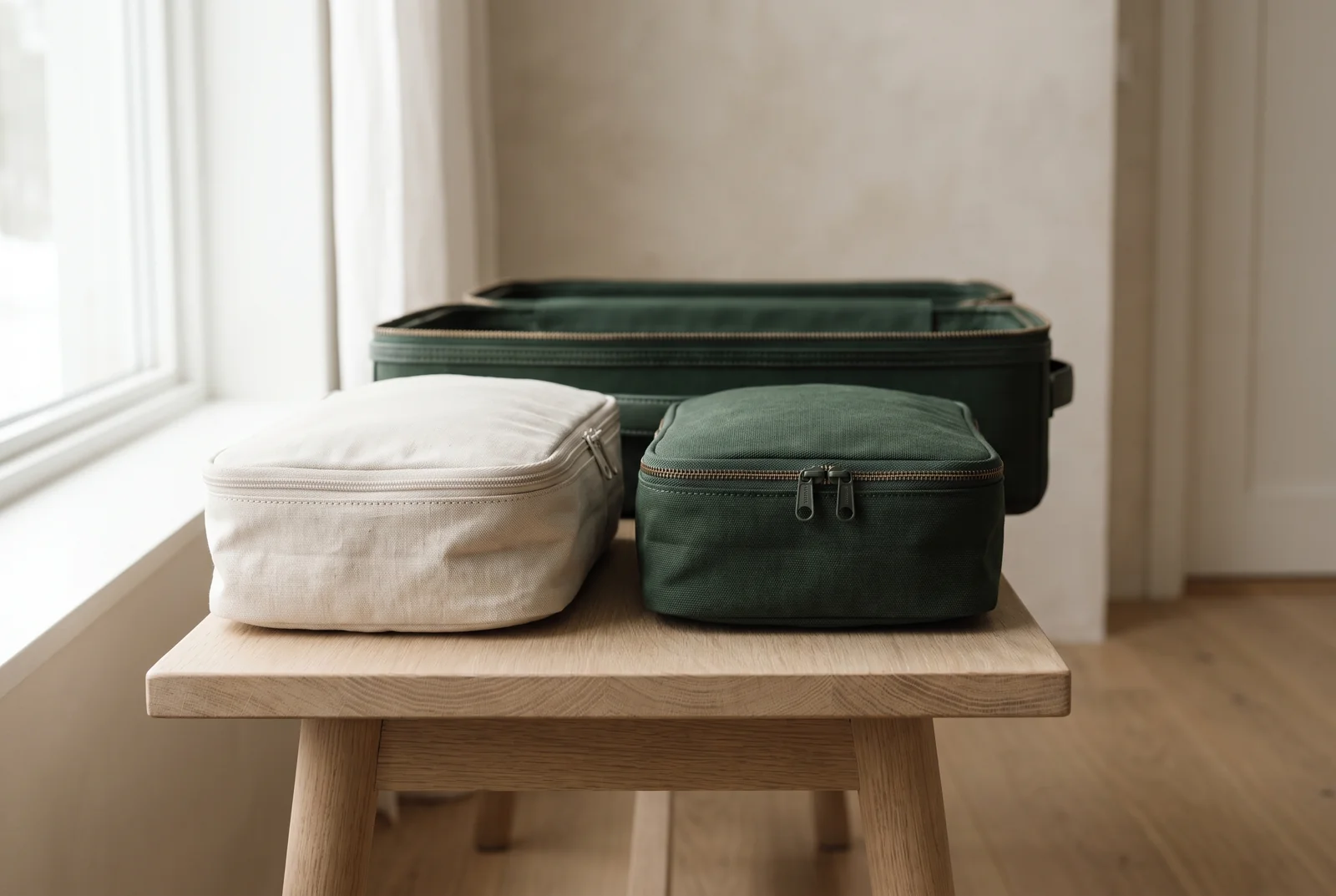
Compression cubes can make clothing easier to organize and reduce some bulk. They do not remove weight, and a tightly compressed block can be awkward in a curved or shallow bag. Start with one useful size before buying a complete set.
Make the comparison that matters
| Check | What it changes | Your next step |
|---|---|---|
| Bulk | Air and soft clothing can compress | Compare packed shape before and after |
| Weight | The cube adds its own mass | Weigh the complete system |
| Access | A dense stack can be harder to search | Group clothes by actual use |
| Fit | A cube can leave unusable gaps | Measure the bag’s interior footprint |
Compression changes bulk, not weight
A compression zip can reduce loose air and clothing bulk. It does not make the contents weigh less. If your bag is near its weight allowance, a denser cube can encourage overpacking rather than solve the actual constraint. Measure the packed bag again after adding the cubes.
Compare layout before buying a set
A useful cube fits a compartment without leaving long, unusable gaps. Cut paper rectangles to the published cube footprints and arrange them inside the bag. Include space for shoes, toiletries and the shape of the wheel housings. Buying every size in a bundle may create more packaging than organization.
Use the zipper in two stages
Load the main compartment so the closure moves without forcing it. Keep fabric clear of the zip path. Then close the compression section according to the maker’s design. If the cube bows into a hard, rounded lump, remove an item rather than using the zip as a clamp.
Choose around the unpacking habit
Ordinary mesh cubes can make contents easy to identify. Compression cubes may suit soft clothing that benefits from reduced bulk. A clean/dirty divider can be useful on a changing-hotel trip, but it does not wash or dry the clothing. Start with one or two cubes and see what actually stays organized.
Before you spend
Lay out the clothing and choose the grouping before choosing the cube. One cube for clothing and a separate washable bag for worn items may be more useful than six identical compartments. Avoid forcing a compression zip around hard toiletries or objects it was not designed to contain. Try the result inside the actual luggage before ordering more sizes.
A useful finishing check
No. The result depends on your clothing, cube design and the suitcase’s internal shape. Shoes, electronics and other rigid items do not shrink with the clothing. Compare a complete trial pack before deciding whether the smaller bag works.
ILLUSTRATIVE EXAMPLE
Put it into practice
If clothing weighs an illustrative 2.0 kg and the empty cube weighs 0.15 kg, compression still leaves 2.15 kg to carry. The benefit has to come from organization or a more useful shape; it cannot solve a weight-limit problem by itself.
Your next steps
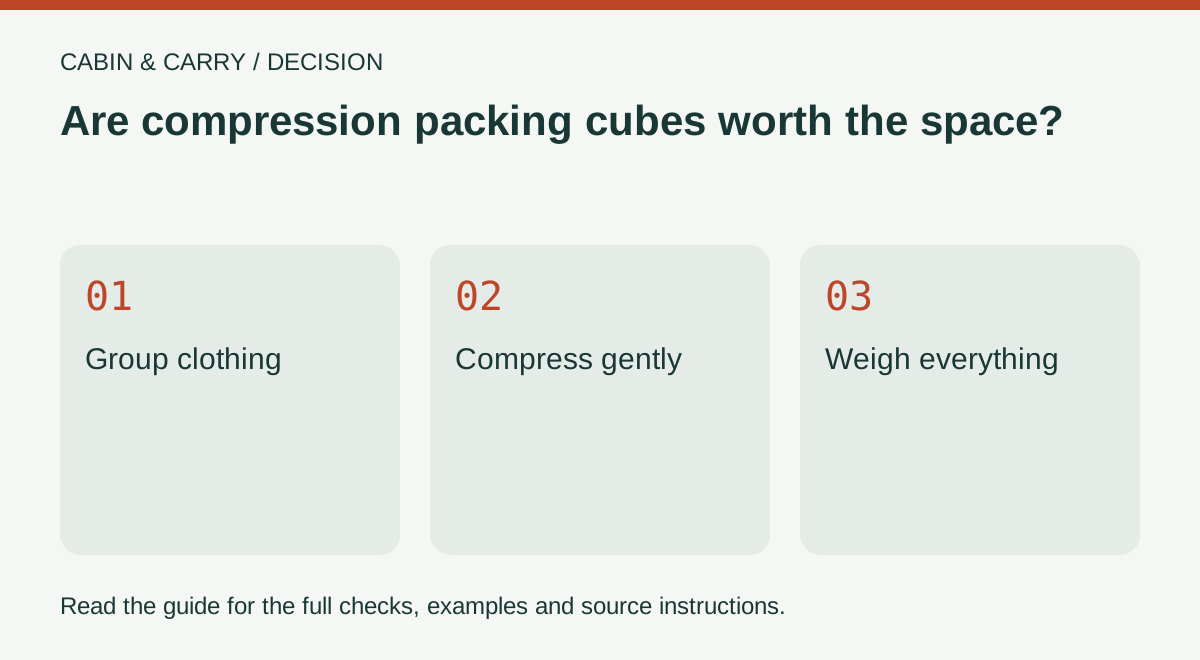
- Group clothing: decide what belongs together
- Compress gently: preserve a usable shape
- Weigh everything: count the organizer
Questions that come up
Do compression cubes make luggage lighter?
No. The clothing weighs the same and the cubes add their own weight.
Should I roll or fold clothing inside them?
Use the method that fits the cube and protects the garment. Compression is not a wrinkle guarantee.
Will compression cubes always let me take a smaller suitcase?
No. The result depends on your clothing, cube design and the suitcase’s internal shape. Shoes, electronics and other rigid items do not shrink with the clothing. Compare a complete trial pack before deciding whether the smaller bag works.
Sources and further reading
Source references for this edition, September 8, 2026. Recheck changeable rules and the exact product or vehicle instructions before acting.