
The journal
What draws moisture out of shoes? A travel drying routine
Use absorbent paper and room-temperature airflow, follow the shoe maker's care instructions and plan for a pair that is still damp at checkout.
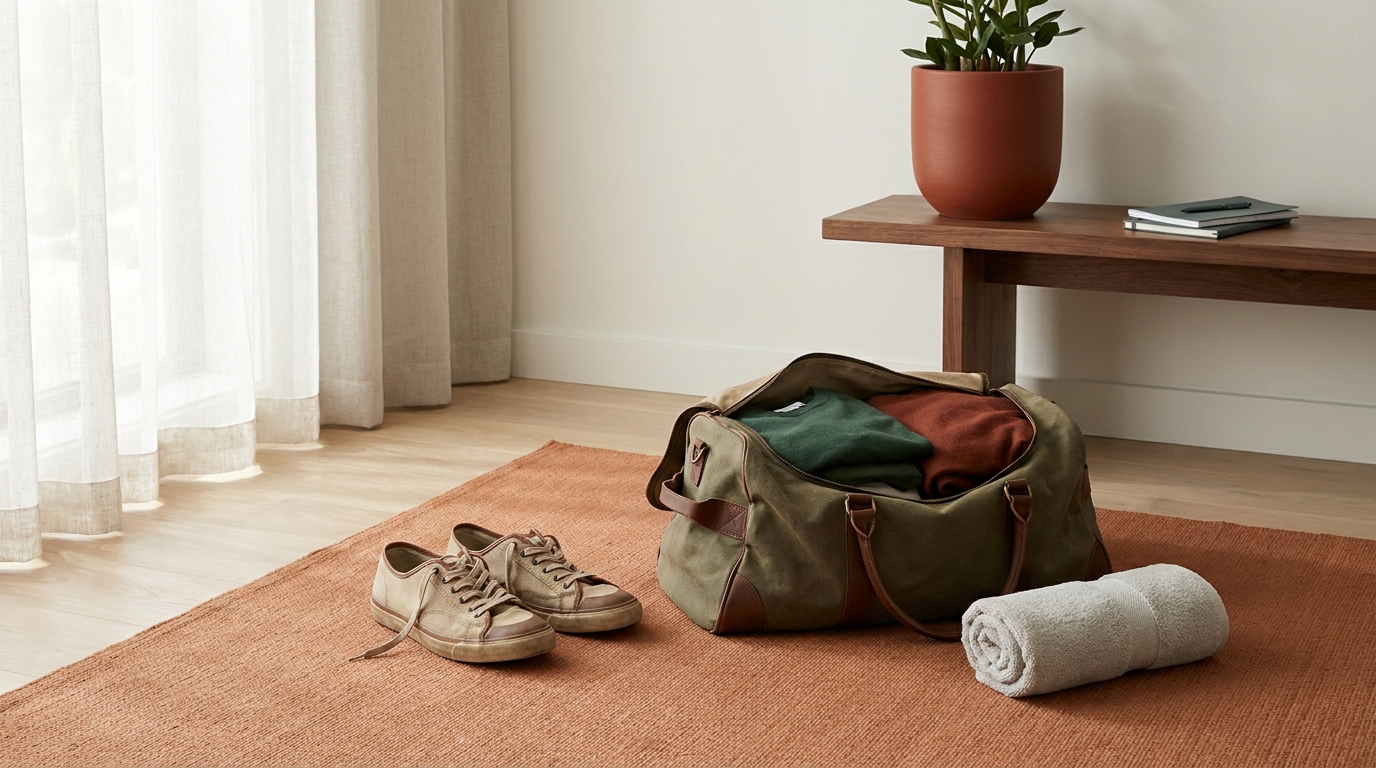
Key takeaways
- Replaceable absorbent paper takes up moisture; airflow helps the open shoe dry.
- Remove only parts designed to come out, and follow the maker's instructions for that footwear.
- Do not promise an overnight result or use direct heat to meet a checkout deadline.
What draws the moisture out?
For wet travel shoes, absorbent paper or a clean cloth can take up water inside the shoe, while room-temperature airflow supports drying. Open the footwear, take out removable insoles where the instructions allow, blot excess water and replace damp stuffing instead of leaving it inside.
Check the particular shoe's care guidance first. Salomon's hiking-shoe instructions call for drying at room temperature in a ventilated area, away from sun and excessive heat, and mention paper as a drying aid. That is a better starting point than assuming a hotel tumble dryer is suitable.
No single method guarantees that a soaked boot will be ready in eight hours. Material, construction, how wet it is and the room conditions all affect the result. Keep a backup plan for the following morning.
Set up a small drying area
Choose a stable surface with a towel beneath it, somewhere you will not trip over the shoes. Avoid blocking a doorway, ventilation opening or heater. Keep them away from bedding and a closed wardrobe where you cannot monitor the setup.
Lay removable insoles separately so they can dry too. Do not pull out a bonded lining or footbed. Loosen the opening as the design allows, and clean off surface dirt according to the maker's method before placing shoes beside other luggage.
Nike describes paper and a fan as drying options. For a simple travel setup, place shoes where ordinary room-temperature air can reach their openings. Keep any electrical appliance safely separated from water and use it according to its own instructions; do not improvise a heater enclosure.
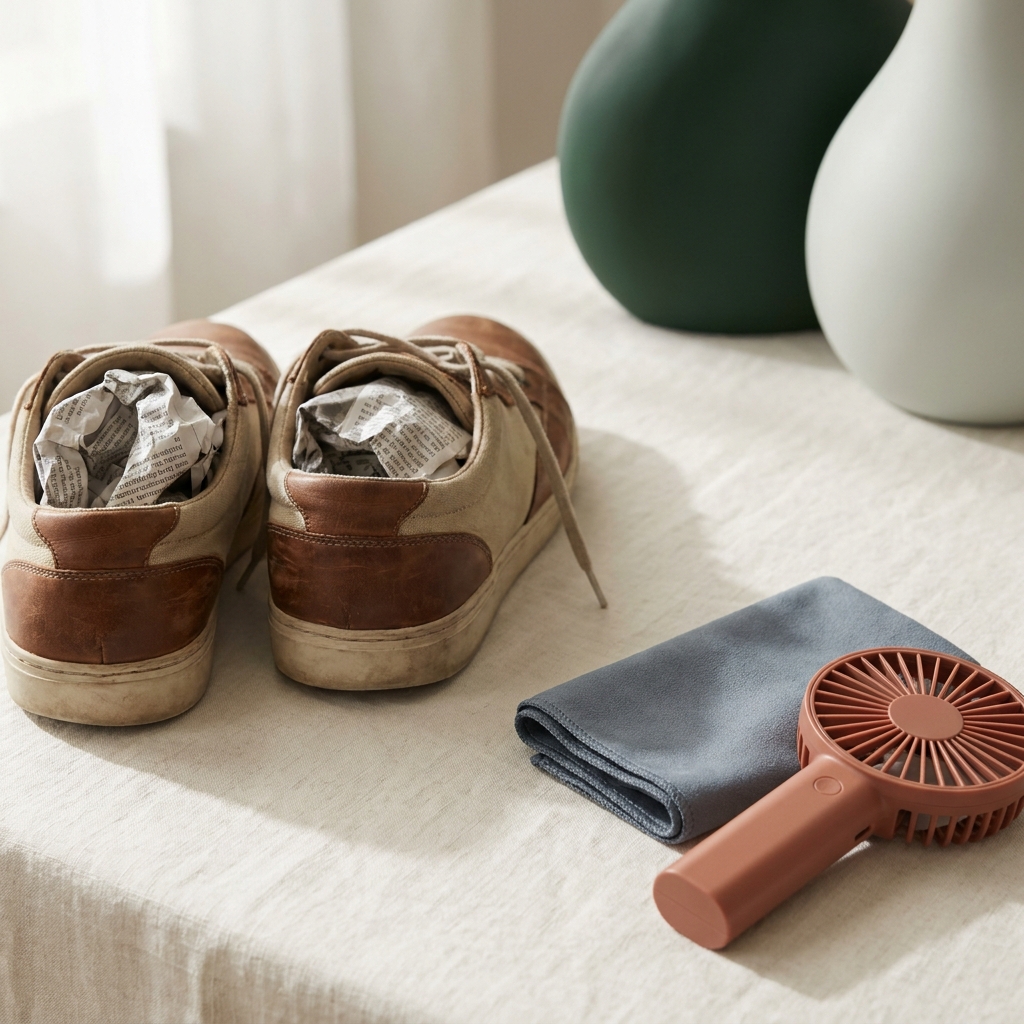
Replace the absorbent material
- Blot accessible excess moisture with a clean towel.
- Loosely place suitable absorbent paper inside without forcing the shoe out of shape.
- Check the paper and replace it when damp.
- Allow airflow into the open shoe and keep removable parts separate.
- Inspect the interior before putting the insole back or packing the pair.
Use unprinted paper where appropriate for the footwear rather than assuming newspaper is harmless to every lining. GORE-TEX's footwear-care advice specifies paper towels rather than newspaper and warns against direct heat and bright sunshine. Different manufacturers can give different material-specific details.
Do not add loose powders or household chemicals to speed the job. You would then need to establish their compatibility with the lining and remove the residue before wearing the shoes.

Avoid turning a drying problem into damage
A radiator, hairdryer or tumble dryer is not a universal shortcut. Salomon's instructions avoid external heat, and GORE-TEX also warns against direct heat sources. Follow the product-specific care method rather than assuming “low” on an appliance is safe for the shoe's adhesives, upper and finish.
Do not interpret a dry outer surface as proof the inside is ready. Check the lining, toe area and removable insole separately. A smell check does not establish dryness or hygiene. If the pair remains damp, continue the permitted drying method or switch footwear.
Likewise, do not count on a few tiny packaging sachets as the whole plan for soaked footwear. Prioritise the care method the shoe maker actually recommends.
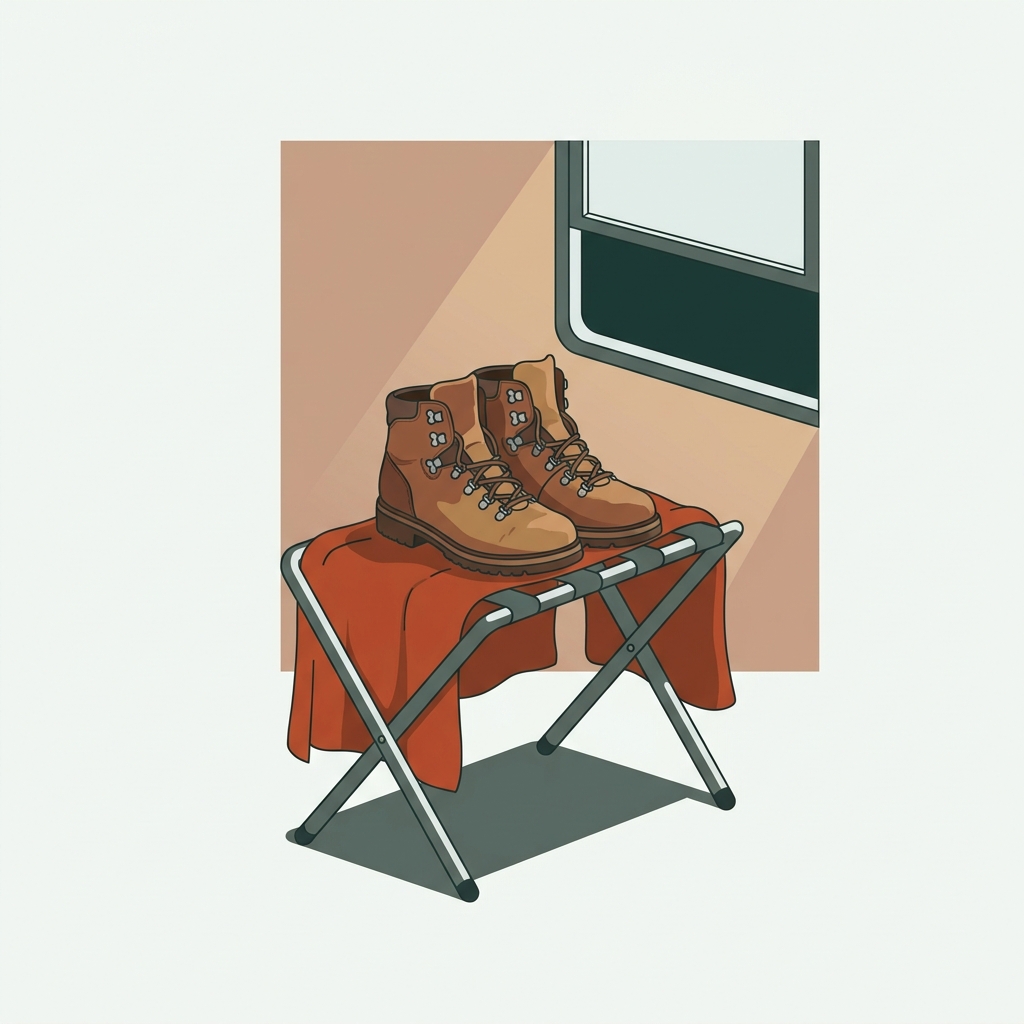
Plan for checkout before the shoes are dry
When you return to the room, decide immediately which pair you can wear tomorrow. Start drying the wet pair early and gather the materials before shops close. If you need more time, ask the accommodation about an appropriate drying area rather than experimenting with an unknown appliance.
If transport cannot wait, protect other belongings during the journey, then unpack the damp pair and resume airing at the first suitable opportunity. Temporary separation for transport is different from storing wet footwear in a closed bag for the rest of the trip.
Hotel-room drying check
Use the trip planner for your wider packing list and our shoe-packing guide when organising the pair for transport.
Common questions
Will paper dry my shoes overnight?
It can help take up moisture, but a drying deadline is not guaranteed. Check the actual interior and keep a backup pair available.
Should I remove the insole?
Only if it is designed to be removable and the maker's care instructions allow it. Do not pull apart bonded components.
Can I put shoes on a radiator?
Do not use direct heat as a general drying method. Follow the footwear maker's instructions for that exact construction.