
The journal
Can I bring a Ziploc bag of medicine and pills on a plane?
What TSA allows for pills and liquid medicines, how to pack them, and why customs rules at your destination still matter.
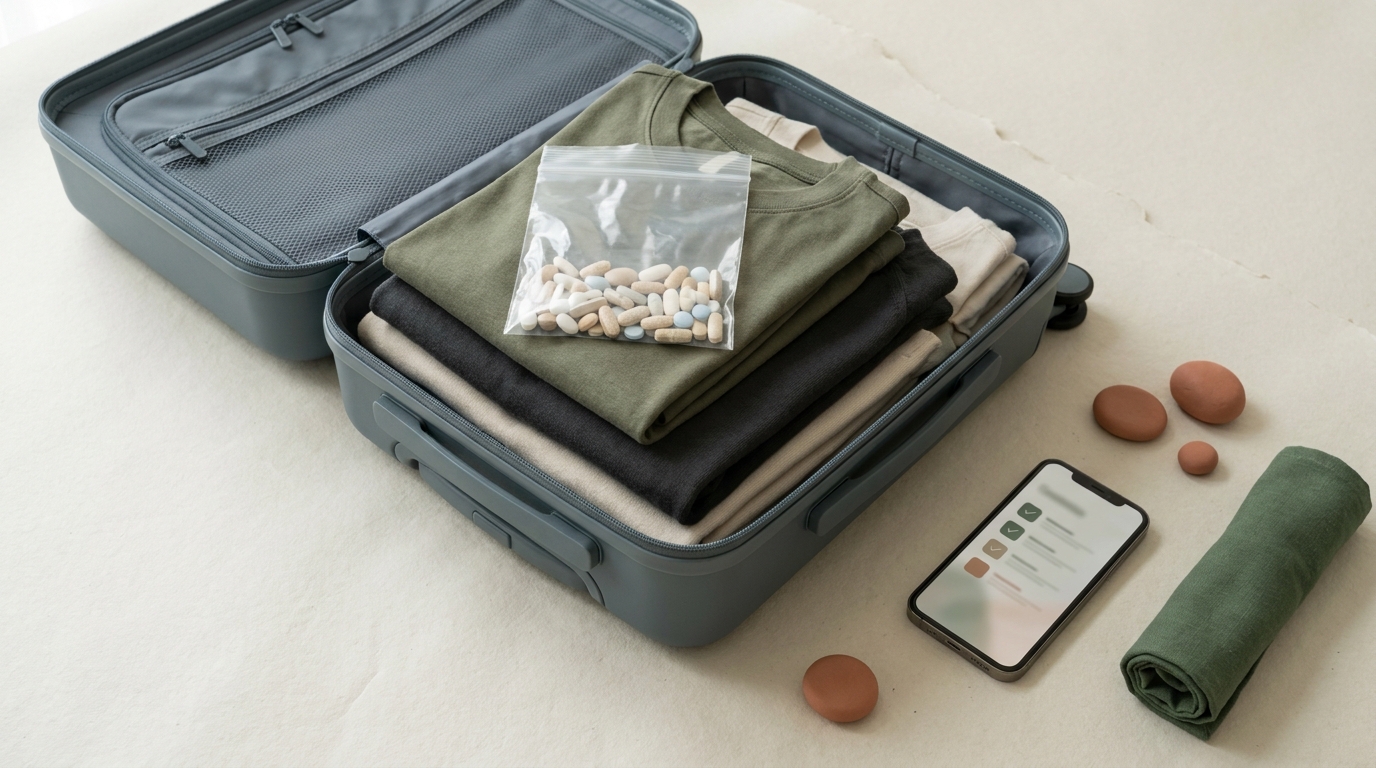
Yes. At U.S. TSA checkpoints you can bring pills and other solid medications in your carry-on or checked bag, with no set quantity limit, and TSA does not require prescription bottles. Medically necessary liquids over 3.4 oz (100 ml) are also allowed in reasonable quantities, but you must tell the officer and they may receive extra screening (TSA Travel Tips). This TSA policy does not override state prescription-labeling laws or border rules in other countries. For international travel, keep medicines in original labeled containers and check import restrictions for each country you’ll enter or transit (CDC Yellow Book).
TSA screening rules (U.S. checkpoints)
Pills and other solids
- Allowed in carry-on and checked bags; no set quantity limit when screened (TSA Travel Tips).
- TSA does not require prescription bottles, but you must follow any applicable state labeling laws for prescriptions (TSA Travel Tips).
- TSA recommends keeping medications in your carry-on so you have access in flight and if bags are delayed (TSA Travel Tips).
Liquid medications
- Medically necessary liquids over 3.4 oz/100 ml are permitted in reasonable quantities for the flight. You must tell the officer at the start of screening, and the items may be X-rayed, tested, or opened for inspection (TSA Travel Tips).
- These liquids do not need to go in your quart-size toiletries bag (TSA Travel Tips).
If you prefer not to X-ray medications
- You may request a visual inspection of your medications instead of X-ray. Make this request before your items go into the X-ray tunnel (TSA Travel Tips).
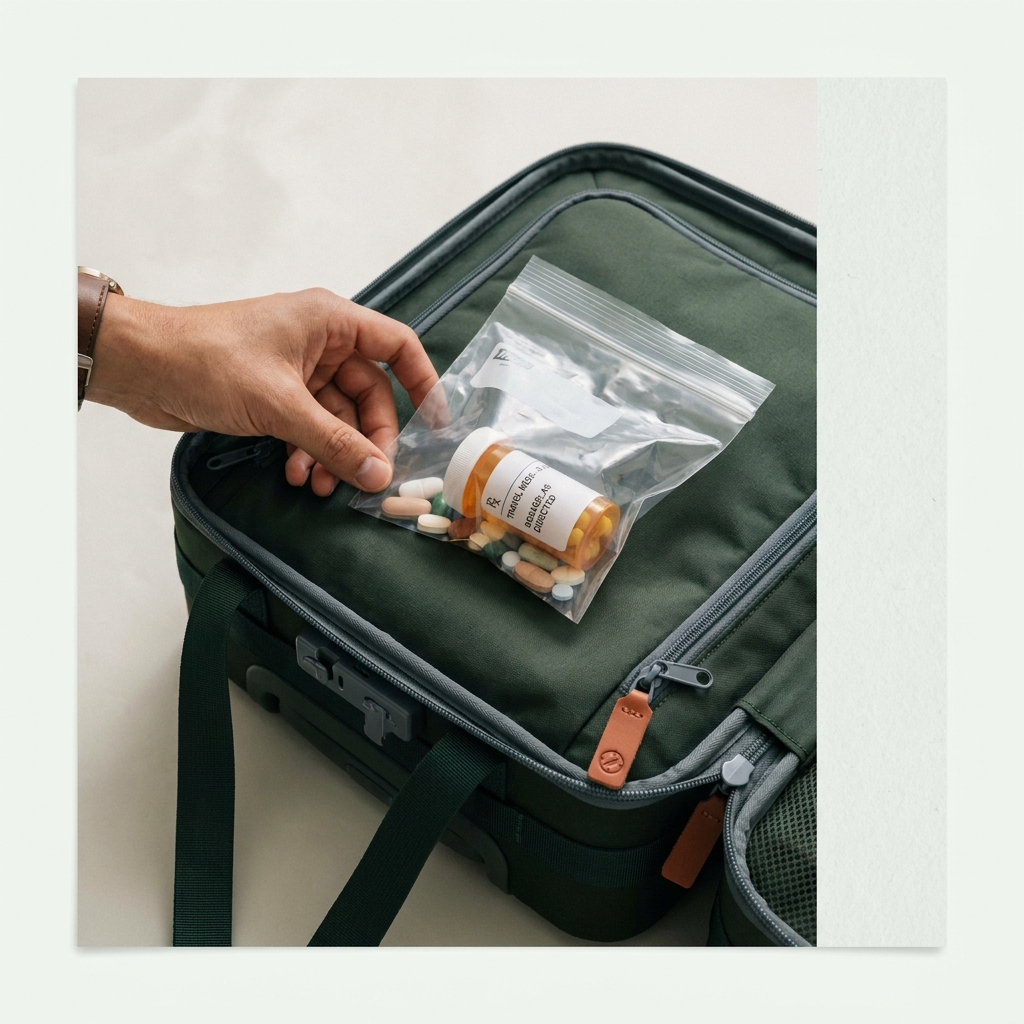
Ziploc bag vs. original containers: how to pack
A clear resealable bag is fine for organizing loose, non-liquid pills for your own convenience. It is not required by TSA. For domestic trips, you can use pill organizers or resealable bags; for international travel, the CDC advises keeping medications in their original, labeled containers to aid identification at borders and avoid confusion (CDC Yellow Book).
Practical tips at the checkpoint:
- Place liquid medicines you plan to declare in an easy-to-reach pocket and present them separately.
- Bring a simple list of your medications. For international trips, a doctor’s letter that lists each medication by generic name, dose, and indication can be helpful (CDC Yellow Book).
International and customs rules you still need to follow
TSA rules cover U.S. security screening only. Destination countries (and some transit countries) may restrict quantities, require you to carry prescriptions, demand advance permission for certain controlled medicines, or prohibit specific drugs altogether. The CDC recommends travelers:
- Keep medications in original, labeled containers and avoid decanting before arrival (CDC Yellow Book).
- Check destination and transit-country laws in advance; if a necessary medication is prohibited and permission cannot be obtained, reconsider travel (CDC Yellow Book).
- Be cautious with controlled substances (e.g., certain opioids, sedatives, stimulants). Penalties for violations can include confiscation, denial of entry, or arrest (CDC Yellow Book).
- Consult official sources such as the destination’s health authority or embassy; the International Narcotics Control Board traveler resources can also help identify country rules on controlled medicines (CDC Yellow Book).
- Avoid CBD or cannabis products when crossing borders; legality varies widely and products with THC content may be illegal even where CBD is permitted (CDC Yellow Book).
- Do not mail medications internationally or carry them for people who are not traveling with you; this is often illegal (CDC Yellow Book).
If you travel with needles or injectables, be ready to show supplies if asked abroad. The CDC notes that having a doctor’s letter can reduce scrutiny in other countries (CDC Yellow Book). For device-specific tips, see our guide to Flying with a CPAP.
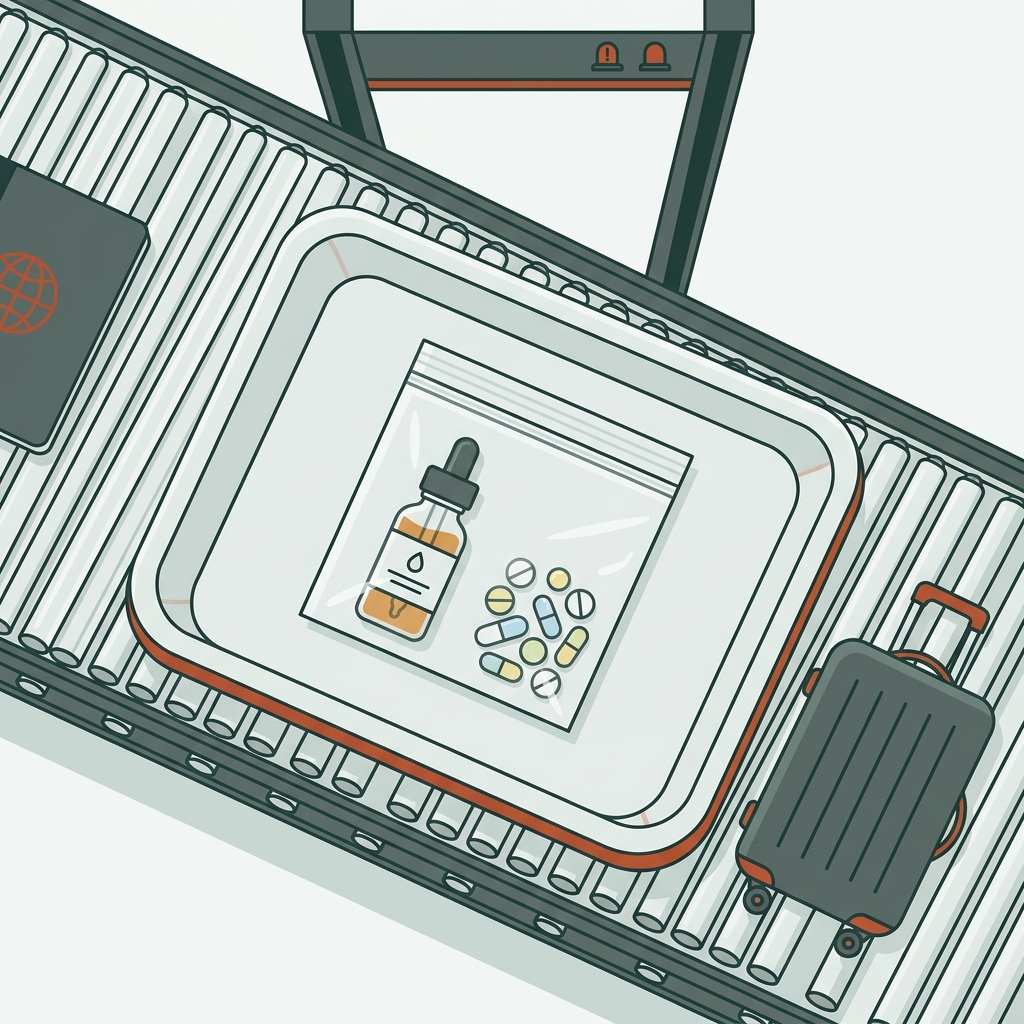
What to do at the checkpoint (quick steps)
- Keep all essential meds in your carry-on.
- Tell the officer about any medically necessary liquids over 3.4 oz; present them separately.
- If you prefer, request a visual inspection of medications before they enter the X-ray.
Carry-on medication prep checklist
FAQs
Do pills need to be in a quart-size bag?
No. Solid medications do not go in your toiletries bag; bring them in carry-on or checked luggage and have them screened normally (TSA Travel Tips).
Can I use a weekly pill organizer or a Ziploc bag?
Yes at TSA checkpoints, but for international travel the CDC advises original, labeled containers to avoid problems at customs (CDC Yellow Book).
Do I need to declare pills at TSA?
No. You only need to tell the officer about medically necessary liquids over 3.4 oz, which may be screened separately (TSA Travel Tips).
For a simple kit to cover minor issues on the road, see our guide to what to pack in a travel first aid kit.
