
Start with the airline’s personal-item dimensions, then check the packed shape, access and carrying comfort. Underseat space can vary by seat and aircraft, so a qualifying bag is not a promise of unrestricted foot space.
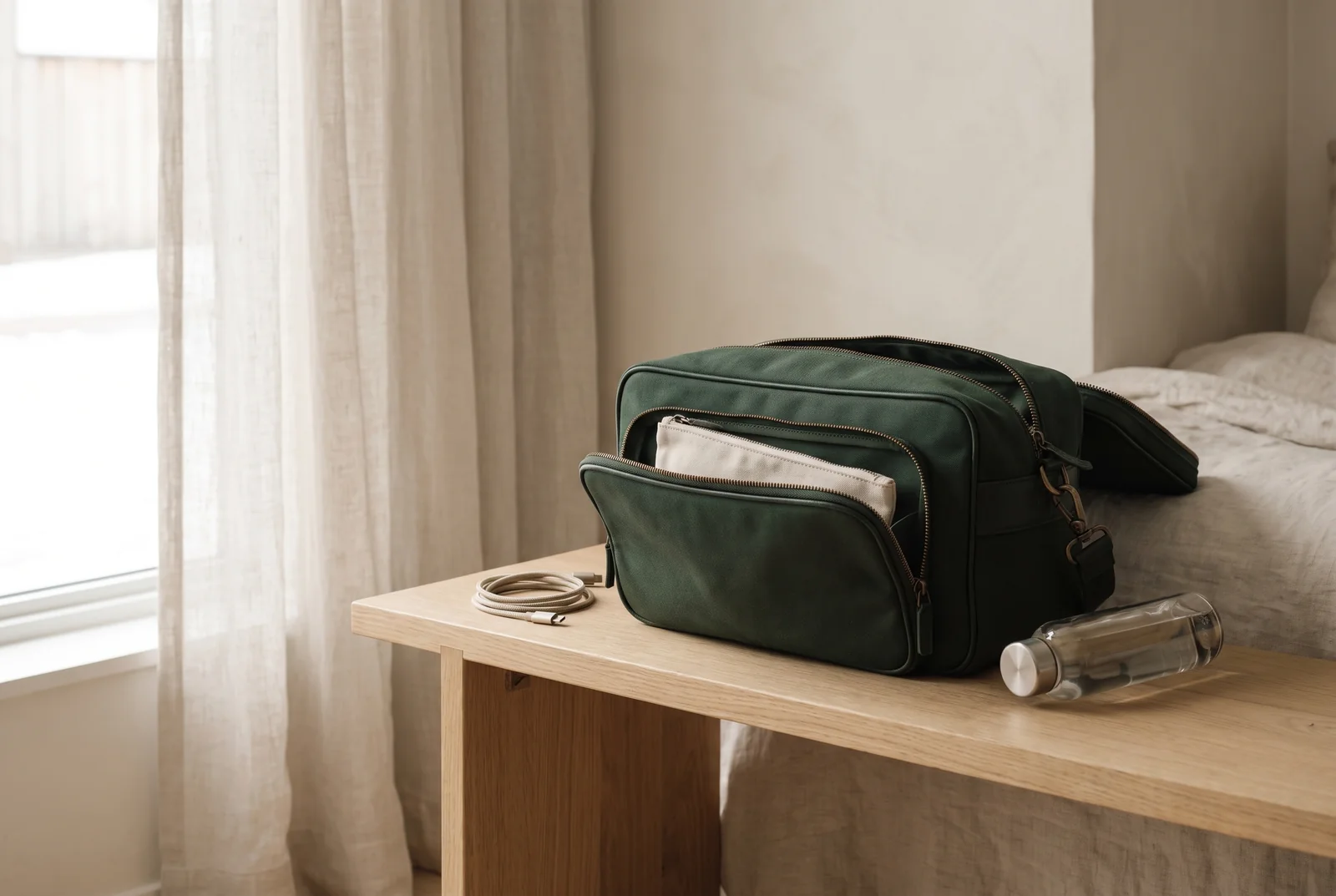
Make the comparison that matters
| Check | What it changes | Your next step |
|---|---|---|
| Exterior dimensions | Whether it meets the published size | Include full side pockets |
| Opening position | Whether essentials are reachable | Try opening it while upright |
| Laptop compartment | Fit and protection for your device | Check actual device dimensions |
| Carrying system | Comfort between terminals | Load it before adjusting the straps |
Choose a shape, then a feature list
Write down the smallest allowance on your itinerary before browsing. A bag with an excellent laptop sleeve is still unsuitable if the filled exterior is too deep. Compare real outer measurements rather than a litre capacity or a photograph of it beneath an unidentified seat.
Build three access zones
Keep travel documents and the phone in a secure, easy-to-reach area. Put the items needed during the flight in a separate pouch. Give heavier electronics a stable position close to the side carried against your body. The aim is to retrieve one thing without emptying the bag into the aisle.
Try it with your normal load
A padded strap and a useful grab handle become meaningful when the bag is full. Simulate a station transfer or a queue at home. If it twists, pulls away or needs constant readjusting, reconsider the load and strap layout. A trolley sleeve is useful only when it fits the handle on the case you actually own.
Leave room to close it easily
A personal item becomes less useful when every pocket is stretched. Keep a small reserve for a removed outer layer or an item transferred from the larger bag. This reserve is a packing choice, not extra allowance. Recheck all three dimensions after making it.
Before you spend
External bottle pockets and organizer panels can be helpful, but count the space they use when filled. Consider whether a structured laptop section forces clothing into a rounded bulge. A trolley sleeve is useful when paired with a suitcase only if it fits your handle arrangement securely; it should not be the deciding feature for a trip where this is your only bag.
A useful finishing check
A backpack can be the personal item when it meets the applicable rules. The product category does not decide this: packed dimensions, the allowance on your fare and the operating airline’s conditions do. A larger travel backpack may instead use a cabin-bag allowance.
ILLUSTRATIVE EXAMPLE
Put it into practice
For a short trip, put documents, a layer and small essentials in the bag, then use a chair as a practice access point. Can you retrieve a charger without emptying everything? This is an access rehearsal, not a simulation of an airline’s actual seat dimensions.
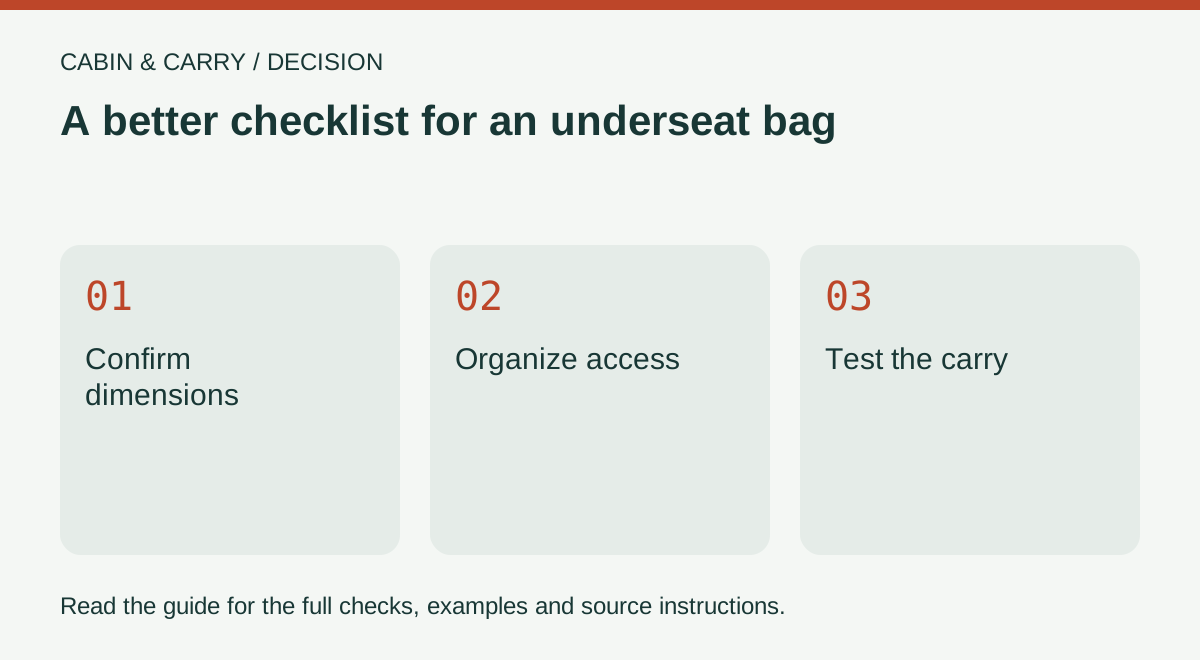
Your next steps
- Confirm dimensions: use the fare-specific rule
- Organize access: separate essentials
- Test the carry: walk with the packed load
Questions that come up
Is an underseat roller always the best personal item?
No. Wheels and handles consume part of the outer allowance and add empty weight. Compare them with the convenience they provide.
Can I use a backpack as a personal item?
Yes when its packed dimensions, contents and your airline’s conditions qualify; “backpack” alone is not an allowance.
Can a backpack count as my personal item?
A backpack can be the personal item when it meets the applicable rules. The product category does not decide this: packed dimensions, the allowance on your fare and the operating airline’s conditions do. A larger travel backpack may instead use a cabin-bag allowance.
Sources and further reading
Source references for this edition, September 8, 2026. Recheck changeable rules and the exact product or vehicle instructions before acting.