
Repack or arrange the correct baggage allowance before the airport. A bag that exceeds a published limit may incur charges or need different handling; softness, a previous successful flight or a retailer’s approval claim does not settle the booking rules.

Make the comparison that matters
| Check | What it changes | Your next step |
|---|---|---|
| Packed bulge | May cause a depth failure | Remove or relocate items |
| Rigid back panel | Cannot simply be squeezed smaller | Measure its fixed dimensions |
| Fare entitlement | Determines which bag types are included | Check the booking before buying an add-on |
| Connecting flight | May have a different operating carrier | Check every segment |
The label on the bag is not permission
“Personal item” is a storage category, not a universal size. Start with the operating airline and the fare you purchased. A bag sold as an underseat bag may exceed one carrier’s limit while fitting another. Underseat space can also change with the aircraft and seat position.
Measure it in its fullest state
Check the packed height, width and depth. A bulging front pocket often causes more trouble than the main compartment. If removing an optional layer or moving a charger makes the bag comfortably smaller, remeasure it after closing the zip. Do not count on squeezing a rigid laptop into a smaller space.
Resolve the mismatch before the airport
Review available baggage add-ons in your booking. Sometimes the right solution is moving nonessential items into a bag already covered by your allowance; sometimes it is purchasing another entitlement. Compare the full journey, including the return flight, before choosing. A paid checked bag and an overhead cabin bag are not interchangeable.
Prepare for a last-minute change
Keep the items you need during the flight easy to transfer into the permitted small bag. If the larger bag is taken at the gate, follow the airline’s instructions on restricted contents and batteries. An anecdote about someone passing a gate check is not a reliable sizing plan.
Before you spend
Try the least expensive change that actually resolves the mismatch. That might be leaving behind an optional pair of shoes, moving items into a permitted second bag or replacing a rigid bag. Compare any baggage purchase in the airline’s own booking system, including the conditions for the route. Do not base the decision on an estimated gate fee copied from a different fare or airport.
A useful finishing check
No. A retailer’s label is not the operating airline’s current allowance for your fare. Check the exact packed bag against your booking and the airline’s source policy. The airline can also make operational decisions about cabin storage.
ILLUSTRATIVE EXAMPLE
Put it into practice
Imagine a personal bag with a rigid 43 cm back panel against a hypothetical 40 cm maximum on that axis. Removing a jumper from its front pocket changes the depth, but not the back panel. A smaller bag or an eligible additional allowance is the meaningful decision.
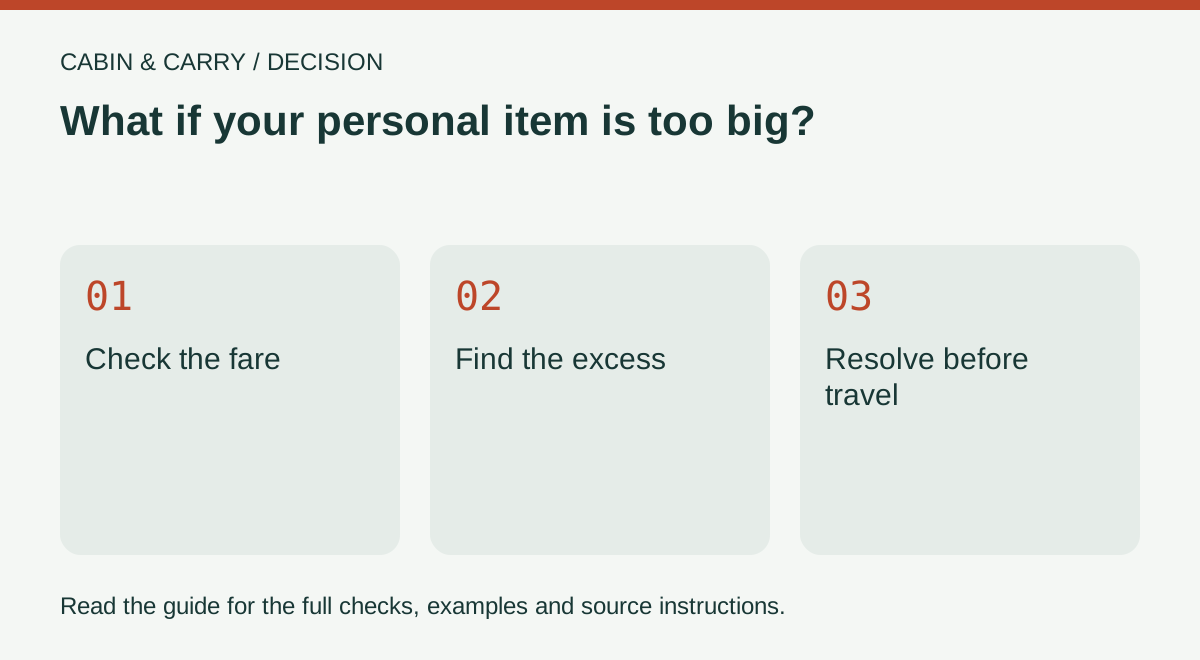
Your next steps
- Check the fare: identify the included bag
- Find the excess: distinguish fixed parts from bulges
- Resolve before travel: repack or update the booking
Questions that come up
What if my personal item is two inches too big?
Treat that as outside the published limit. Repack, choose a smaller bag or arrange the correct baggage entitlement before departure.
Who sets the personal-item size?
The airline sets its baggage allowance. Security screening is a separate check.
Does an airline-approved label guarantee acceptance?
No. A retailer’s label is not the operating airline’s current allowance for your fare. Check the exact packed bag against your booking and the airline’s source policy. The airline can also make operational decisions about cabin storage.
Sources and further reading
Source references for this edition, September 8, 2026. Recheck changeable rules and the exact product or vehicle instructions before acting.