
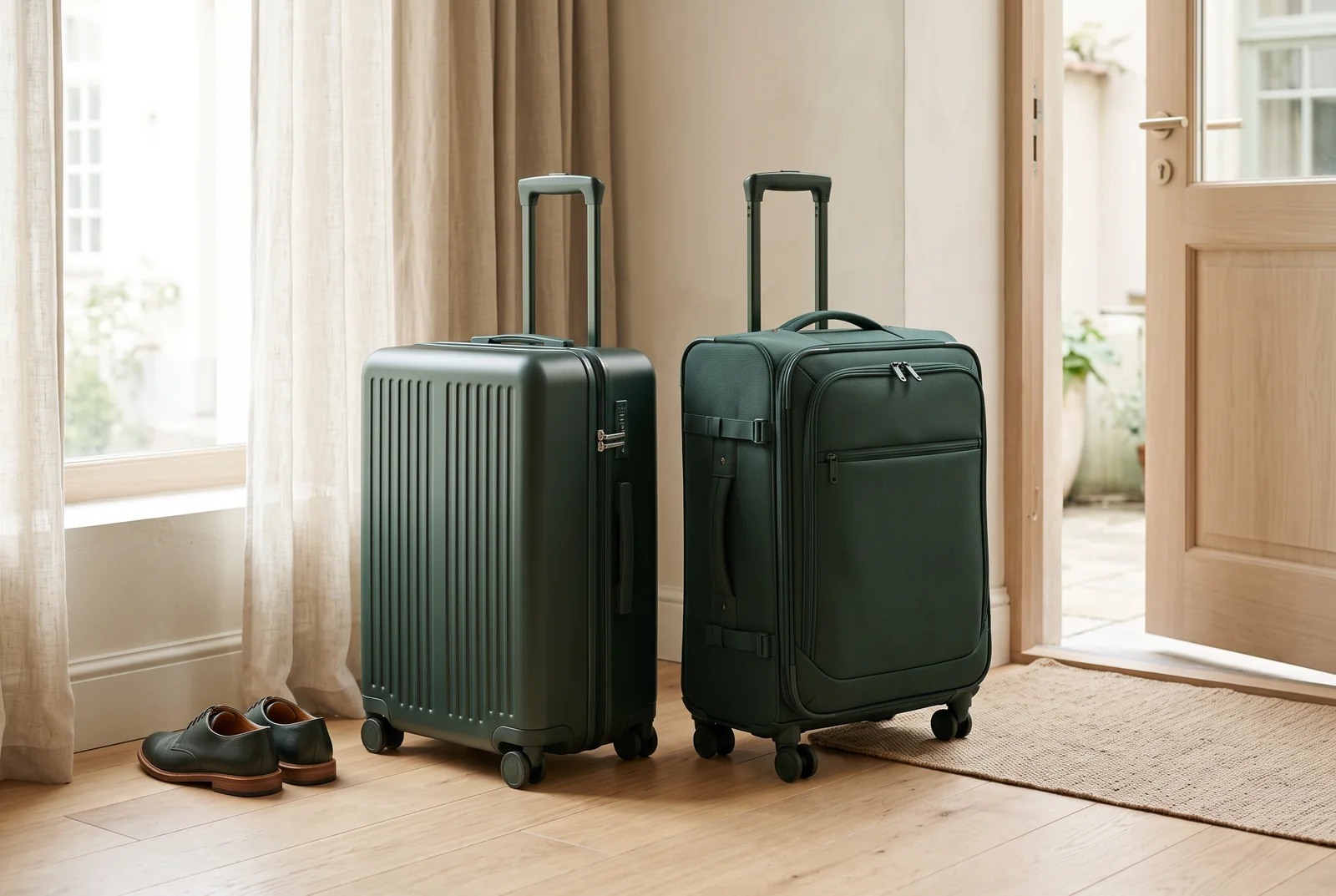
Choose around the things you carry and how you access them. A hard case offers a structured enclosure; a soft case may offer outside pockets and a different packing layout. Neither construction guarantees airline fit, low weight or protection from every impact.
Make the comparison that matters
| Check | What it changes | Your next step |
|---|---|---|
| Outside access | Documents and layers during a transfer | Try the pockets with the bag packed |
| Opening style | Space needed in a small room | Compare clamshell and lid access |
| Structure | How awkward items sit inside | Inspect the lining and usable shape |
| Serviceability | What happens after wear | Check wheels, handles and repair options |
Start with what is inside
A shell material alone does not establish durability. Wheel mounts, zip construction, corner design and repair support deserve a place in the decision. A rigid case can offer a predictable shape; a fabric case can offer convenient outside access. Neither protects fragile contents without thoughtful padding.
Compare the opening in your actual room
A clamshell case needs room for two halves to lie open. A lid-opening fabric case may be easier to live from on a narrow luggage rack. Before buying, sketch the open footprint on the floor. That simple check can matter more on a compact hotel stay than a small difference in catalogue volume.
Look at pockets and expansion
Outside pockets are convenient for a jacket or document pouch, but filling them can change the packed depth. Expansion creates useful room for a return journey; it can also move a bag beyond a cabin limit. Compare unexpanded overall measurements first, then decide whether you will ever use the extra space.
Use a short buying checklist
Ask for full exterior dimensions, empty weight, wheel replacement options, warranty exclusions and the opening layout. Then load a comparable bag with your usual trip contents. Choose the design that works with your packing and transfers rather than assuming an airline prefers a particular shell.
Before you spend
Compare the complete bags at similar external dimensions and with the features you need. A light empty bag becomes less attractive if you must add several pouches to recreate its missing organization. Conversely, built-in dividers that do not suit your kit occupy space on every trip. Review return conditions so you can pack the bag at home, open it in a realistic space and check the handles before committing.
A useful finishing check
No construction category is reliably lighter in every comparison. Look at the actual empty weight of the specific size and include any organizers you will use. Compare weight only after both bags meet the required dimensions and carry the equipment you need.
ILLUSTRATIVE EXAMPLE
Put it into practice
For a weekend trip with a laptop, jacket and several rail changes, accessible pockets may matter more than shell material. For a single hotel stay with organized clothing, a clamshell can be comfortable to unpack. Write down those actual movements before ranking materials.
Your next steps
- Map access: list what comes out en route
- Pack realistically: use your own kit
- Inspect service: compare repairable parts
Questions that come up
Do airlines prefer hard or soft luggage?
The allowance concerns dimensions, weight, count and permitted contents. Shell type does not override those rules.
Can a soft bag fit more?
It may flex, but any filled pocket or expansion still counts toward the packed exterior.
Is a hard suitcase always the lighter option?
No construction category is reliably lighter in every comparison. Look at the actual empty weight of the specific size and include any organizers you will use. Compare weight only after both bags meet the required dimensions and carry the equipment you need.
Sources and further reading
Source references for this edition, September 8, 2026. Recheck changeable rules and the exact product or vehicle instructions before acting.