
The journal
How to measure torso length for backpack fit
Use the pack maker’s back-length landmarks, with a helper if useful. Record the measurement, match the exact model’s range and check the loaded pack’s intended support.
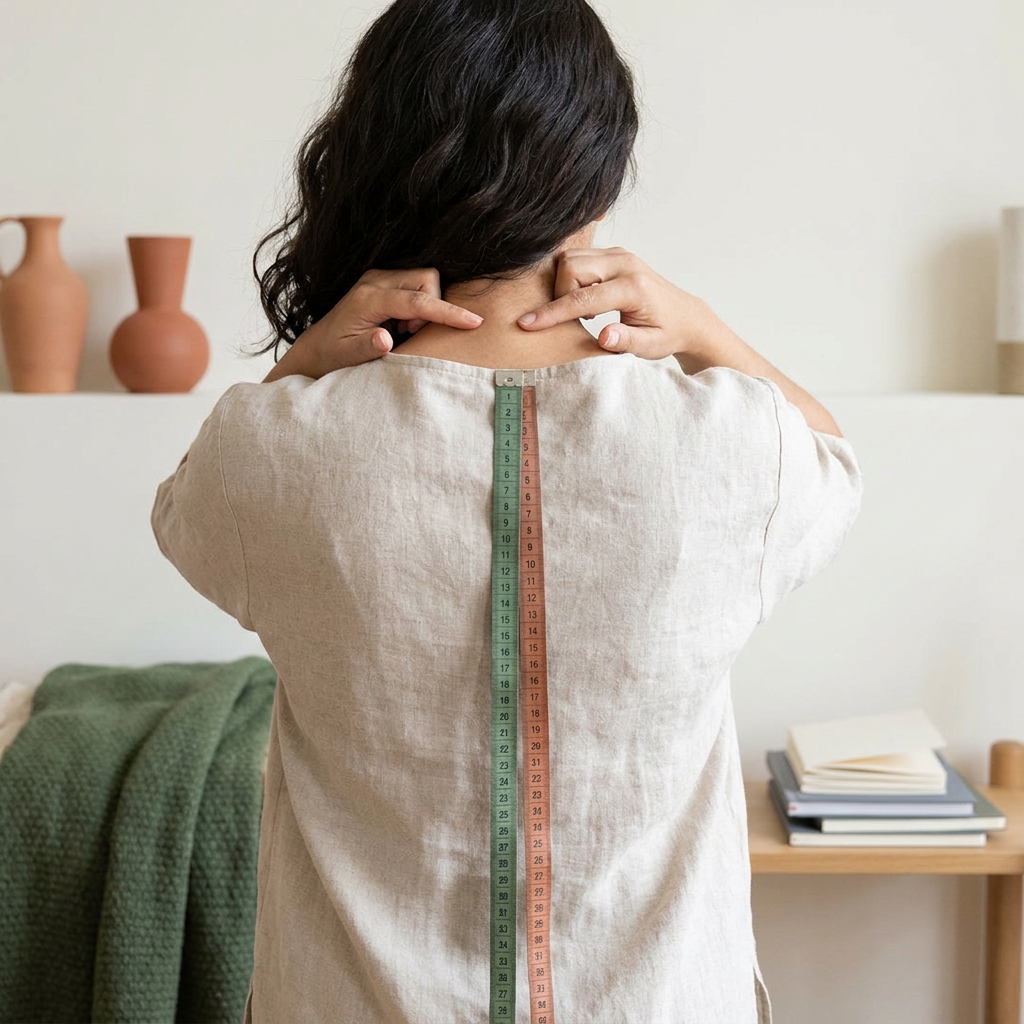
Measure your torso length by finding the bony bump at the base of your neck (C7 vertebra), then measuring straight down your spine to the level of the tops of your hip bones (iliac crest). This C7-to-iliac crest distance is the number brands use to size backpacks, not your overall height (Gregory torso length guide).
A helper can make the back measurement easier to read without twisting. Use the maker’s diagram for the exact reference points; this is a pack-fitting measurement, not a medical assessment.
Step-by-step: measure your torso length
- Stand naturally. Keep a relaxed, upright posture.
- Find C7 at your neck. Tilt your head slightly forward. The most prominent bump at the base of your neck is C7, your top measuring point (Gregory).
- Find your iliac crest. Place hands on your hips with thumbs back, fingers forward. Slide up until you feel the top ridge of each hip bone; this level is your lower measuring reference (Gregory).
- Place the tape. Put the end of a soft tape on C7. Let the tape fall down your spine.
- Mark the crossing point. Keep one hand holding the tape at C7. With the other, slide a thumb from the top of your hip bone horizontally toward the center of your lower back. Where that level meets the tape is your measurement point (Gregory).
- Read your torso length. Hold the marked point on the tape, bring it around to your front, and read the number directly at your thumb. That is your torso/back length (Gregory).
Use your measurement to pick a travel backpack
Backpack sizing is based on torso length, not height, so always match your measurement to the brand’s size chart for the exact pack you’re considering (Gregory). When choosing a travel backpack:
- Check the maker’s torso range. Find the size whose torso range includes your measurement. Adjustable-torso models can fine-tune within a range; fixed-torso packs need a closer match.
- Try it with weight. Follow the brand’s fitting guidance with some load to simulate travel use. For example, Gregory suggests loading several kilograms and then dialing in the fit, including hipbelt position, during a try-on (brand example).
- Prioritize comfort over labels. Unisex, men’s, and women’s labels vary by brand; your torso match and comfort should lead the decision.
Quick self-fit check once you have a pack
- Position a load-bearing hipbelt as instructed. Set the hipbelt so it wraps over the top of your hip bones. Some brands, like Gregory, specify exactly where the top edge should sit as part of their fit process (brand example). Follow your pack maker’s instructions.
- Shoulder straps contour. Straps should lie smoothly over your shoulders without gapping behind the top of your shoulders when the torso length is adjusted correctly.
- Check pressure and support. With a typical travel load, on a pack designed with a load-bearing hipbelt, check the maker’s intended load support, not digging into the shoulders or pulling backward.
Common mistakes to avoid
- Measuring to your waistband. Clothing waistbands sit higher or lower than the iliac crest. Use the top of the hip bones, not garments.
- Rounding up too far. If you’re between sizes, an adjustable torso model can help. Otherwise, compare both adjacent sizes in person; a too-long torso setting can cause shoulder lift and poor balance.
- Slouching or craning. Keep a natural stance so C7 and the iliac crest level are accurate.
- Skipping the brand’s fit steps. After sizing, use the manufacturer’s fitting sequence for that pack to dial in hipbelt, shoulder straps and any torso adjustment.
Put this into practice
Record the body measurement and the exact pack’s adjustment range as separate information. Confirm fit with the maker’s method and a realistic load rather than selecting a pack only from its litre capacity.
Measure your torso length: quick checklist
Related reading from Cabin & Carry
- What is the best way to distribute weight in a backpack?
- How to pack shoes in a backpack: clean, separate and balance
